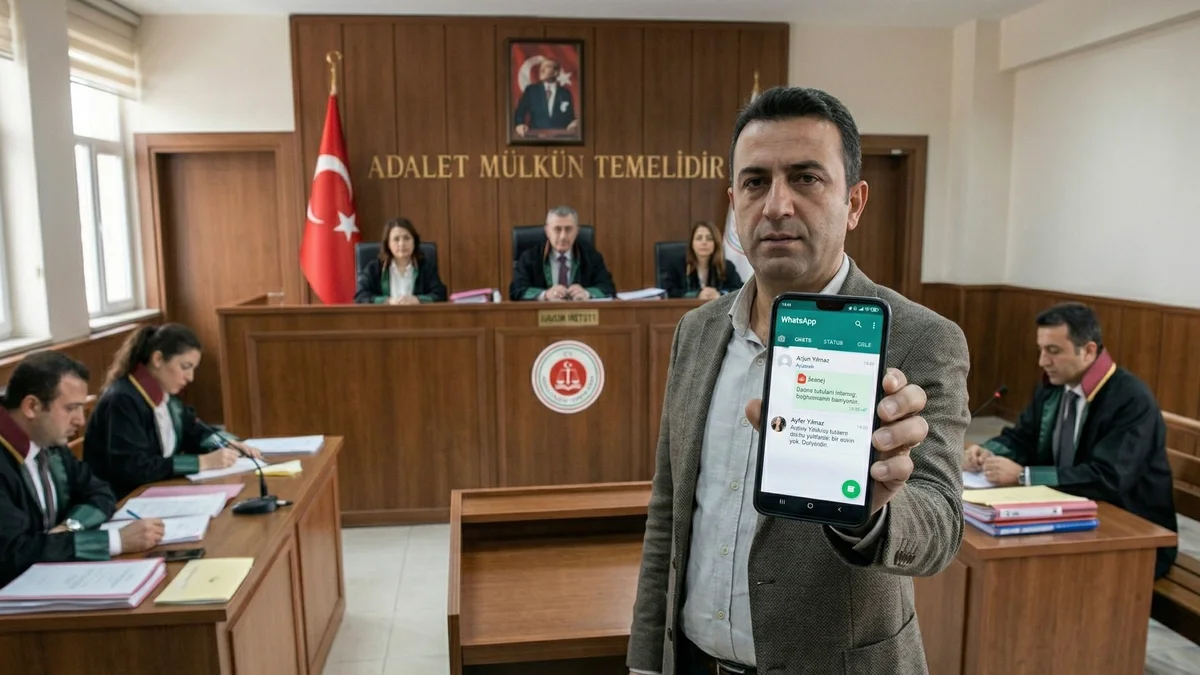
Absolute Nullity in General Assembly Resolutions: The Conflict Between the YSK and the Civil Judiciary in Political Parties
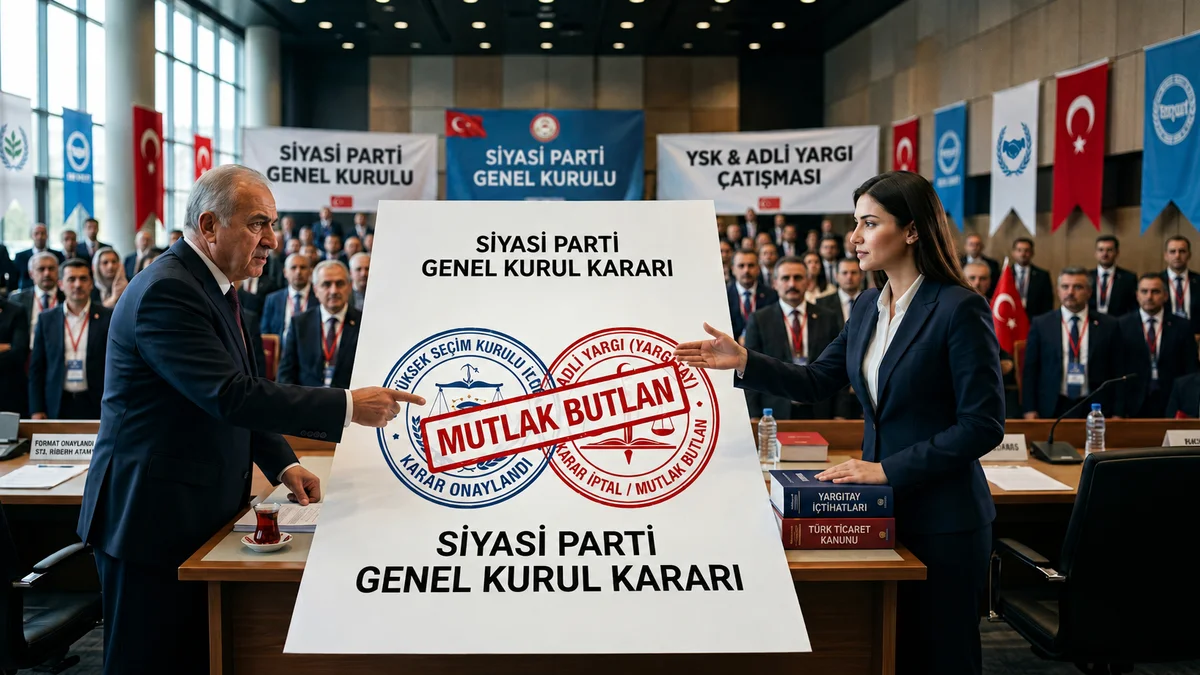
The Invalidity of General Assembly Resolutions via Absolute Nullity in Political Parties and Associations
Political parties and associations, standing as the foundational pillars of a democratic social order, manifest their organizational will through their highest decision-making organs: the general assemblies (grand congresses/conventions). However, is every resolution enacted by these massive corporate mechanisms fully compliant with the law? What are the exact legal consequences within the juridical world when a general assembly resolution is adopted in direct violation of mandatory statutory provisions?
Recently, the concept of “Absolute Nullity” (Mutlak Butlan) and the intense “Debate on the Competent Court,” which have dominated Turkey’s political and legal agenda, sit at the very heart of these inquiries. As Malgır Law Firm, we deconstruct in full legal detail the precise nature of absolute nullity, its impacts on the convention resolutions of political parties, and specifically the conflict of jurisdiction between the Supreme Election Council (YSK) and the Civil Courts of First Instance.
What is Absolute Nullity and How Does It Differ from Annulment?
Within our legal framework, the invalidity of a legal transaction is fundamentally divided into two distinct categories: “voidability / annulment” (iptal edilebilirlik) and “absolute nullity / void ab initio” (mutlak butlan / kesin hükümsüzlük).
Absolute Nullity: This occurs when a legal transaction, despite possessing the necessary constitutive elements prescribed by law, fails to produce any legal consequences from the exact moment of its inception (from the very beginning) because its substantive content or overarching purpose violates the mandatory, non-discretionary rules of the legal order. Such a transaction is dead-born and cannot be rendered valid subsequently through retrospective ratification or approval.
The Fundamental Distinctions from Annulment Are as Follows:
Statutes of Limitations: Pursuant to the Turkish Civil Code, a lawsuit for the “annulment” of a resolution enacted by an association or political party general assembly must strictly be initiated within 1 month from the date the resolution was discovered, and in any event, within 3 months from the date the resolution was adopted. Conversely, a claim of absolute nullity is not subject to any time limit or statute of limitations; it can be asserted at any stage and at any time.
Ex-Officio Review by the Judge: While grounds for annulment can solely be raised and argued by the plaintiff party, grounds for absolute nullity must be taken into account ex-officio (kendiliğinden) by the Judge, provided they are apparent from the case file, even if neither party has explicitly raised such a demand.
Under Which Circumstances Can a Judgement of Absolute Nullity Be Rendered?
Article 27 of the Turkish Obligations Code establishes the strict boundaries of absolute nullity. For a general assembly resolution of an association or political party to be recognized as invalid via absolute nullity, one of the following legal scenarios must manifest:
Violation of Mandatory Statutory Provisions: The resolution openly breaches the non-discretionary, mandatory rules explicitly dictated under the Political Parties Law or the Associations Law. (For instance, the convention call being executed by unauthorized individuals or body, or the collective will of the delegates being defective through extortion).
Violation of Public Policy (Kamu Düzeni): The resolution adopted bears a nature that disrupts the fundamental fabric of the State or the general public order of society.
Violation of Public Morality and Personality Rights: The resolution constitutes a direct assault against universal public moral standards or the fundamental personality rights of the organization's members.
Impossibility: The general assembly enacting a resolution whose implementation is physically or legally impossible.
The Great Debate Dividing the Legal World: Who Vets Absolute Nullity in Political Parties?
Where the dispute involves an ordinary association, it is universally accepted that absolute nullity lawsuits fall within the jurisdiction of the civil judiciary (the Civil Courts of First Instance / Asliye Hukuk Mahkemeleri). However, where the entity in question is a Political Party, the legal community is split exactly down the middle. At the epicenter of this structural controversy sits Article 21 of the Political Parties Law (SPK) No. 2820.
Article 21 of the SPK mandates that all objections regarding convention elections shall be adjudicated by the local district election board judge within two days, and that resolutions rendered by the Supreme Election Council (YSK) upon subsequent appeals against those decisions are final and absolute.
How should this mandatory article be interpreted when a profound legal crisis materializes? Two diametrically opposed schools of thought clash within the legal community:
School of Thought 1: “The YSK Holds Exclusive Jurisdiction; Civil Judiciary Intervention is a Usurpation of Power”
Political parties are not ordinary associations; they are unique, sui generis institutions and indispensable components of constitutional democracy. According to jurists defending this view, the Political Parties Law carries the character of a “special statute” (özel kanun). The wording of Article 21 of the SPK is unequivocal: any objection regarding a congress or convention must be vetted by the election boards and becomes absolute upon the final decree of the YSK. Past this stage, a Civil Court of First Instance declaring a political convention invalid based on grounds of “absolute nullity” represents a total disregard for a special statute and constitutes a clear usurpation of power (yetki gaspı). The internal machinery and operations of political parties cannot be trapped within the long-lasting litigation processes of general civil courts.
School of Thought 2: “The YSK Vets Merely the Ballot Box; the Civil Court Vets Foundational Nullity”
According to this opposing approach—which has occasionally been adopted by the Court of Cassation (Yargıtay)—the statutory duty of the YSK and the local election boards is strictly restricted to the “mechanics of the election” (the setting up of ballot boxes, the counting of votes, ballot papers, etc.).
However, if a defect exists that goes completely beyond the voting mechanism and reaches the gravity of absolute nullity / non-existence (mutlak butlan / yokluk)—such as a failure to meet the core legal prerequisites for convening the meeting or calls executed by an unauthorized body—the SPK recedes, and the foundational supreme statutes, namely the Turkish Civil Code and the Obligations Code, intervene. Verifying absolute nullity is not an act of election law; it is a private law adjudication, and its solitary address is the Civil Court of First Instance.
Doctrinal Summary: Consequently, annulment or absolute nullity actions targeted at the conventions of political parties are navigated on a highly fragile and controversial legal battleground, where a full harmonization of jurisprudence between the Court of Cassation and the YSK has yet to be achieved.
The Legal Consequences of a Judgment of Absolute Nullity: The “Domino Effect”
Setting aside this jurisdictional debate, when a court renders a definitive judgment of absolute nullity, the resulting legal outcome triggers a total “Domino Effect.”
Retroactive Collapse (Geçmişe Etkili Çöküş): The court decree does not merely annul the transaction from the date of the judgment; rather, it formally declares that the transaction never existed from the very beginning (void ab initio).
The Invalidity of Connected Transactions: Because the management board elected during an absolutely null convention lacks valid organizational authority, all subsequent corporate decisions executed by them (convening subsequent congresses, enacting amendments to the bylaws, processing organizational appointments) automatically collapse and become null and void by operation of law. The management of the political party or association instantly reverts to its previous legally legitimate status.
Standing to Sue (Taraf Ehliyeti): Who Can Initiate an Action for Absolute Nullity?
Because absolute nullity constitutes a severe legal defect directly concerning public policy, the standing to sue (dava açma hakkı) is structured in an extremely wide manner. The plaintiff is not required to have attended the meeting or to have formally entered a dissenting opinion into the convention minutes. Standing is granted to:
Official registered members listed in the records of the political party or association,
Duly appointed delegates of the grand convention or local congress,
Third parties whose personal rights or material interests are directly violated as a result of the invalid resolution.
Conclusion and Strategic Legal Assessment
The institution of absolute nullity stands as the most powerful judicial shield protecting the legal foundations of civil society and politics. Especially within political parties, the intense jurisdictional friction between the YSK and the Civil Courts of First Instance renders it mandatory that every procedural step taken in such high-stakes disputes be organized under a flawless, comprehensive legal strategy.
Deploying our specialized expertise in corporate and public association litigation, Malgır Law Firm provides strategic legal consultancy and courtroom representation to successfully navigate complex organizational disputes and protect institutional legitimacy before the courts.
REFERENCES:
2820 Sayılı Siyasi Partiler Kanunu Mevzuatı (The Political Parties Law No. 2820)
4721 Sayılı Türk Medeni Kanunu ve Borçlar Kanunu Genel Hükümleri (The Turkish Civil and Obligations Codes)
Landmark Jurisprudence of the Court of Cassation (Yargıtay) and the Constitutional Court (AYM)
Precedents and Final Resolutions of the Supreme Election Council (YSK)
This article was prepared by Av. Mehmet Serhat MALGIR.