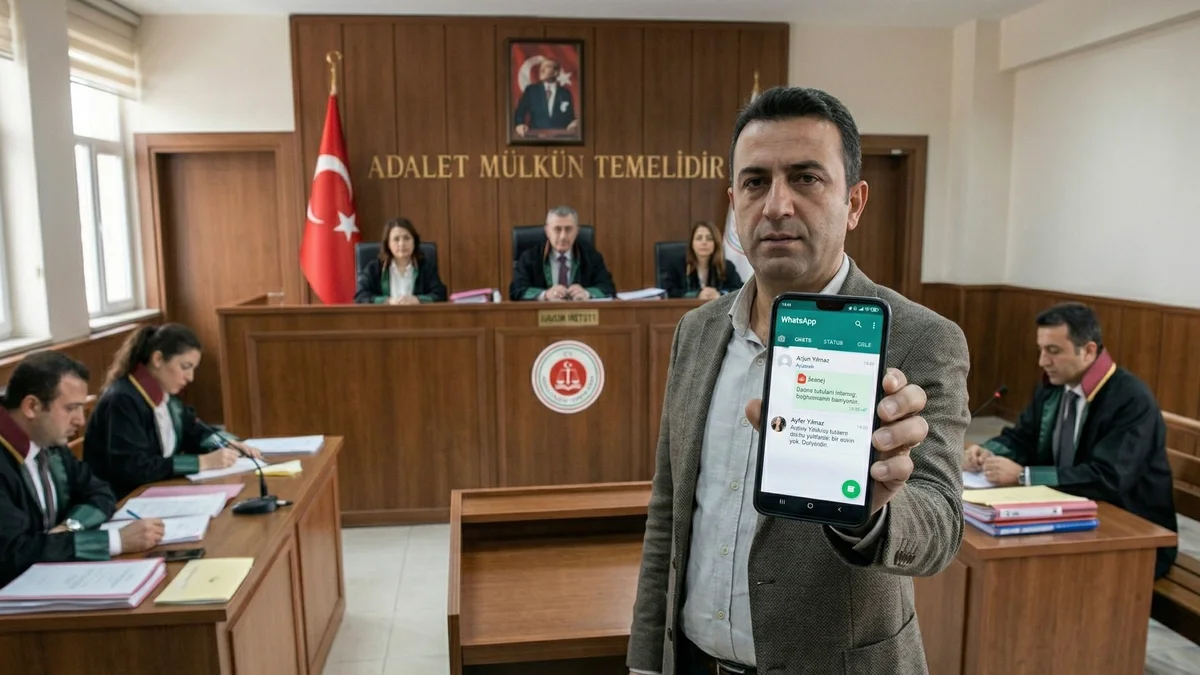
Guide to Tort Law and Compensation: How Can You Remedy the Damages You Have Suffered?
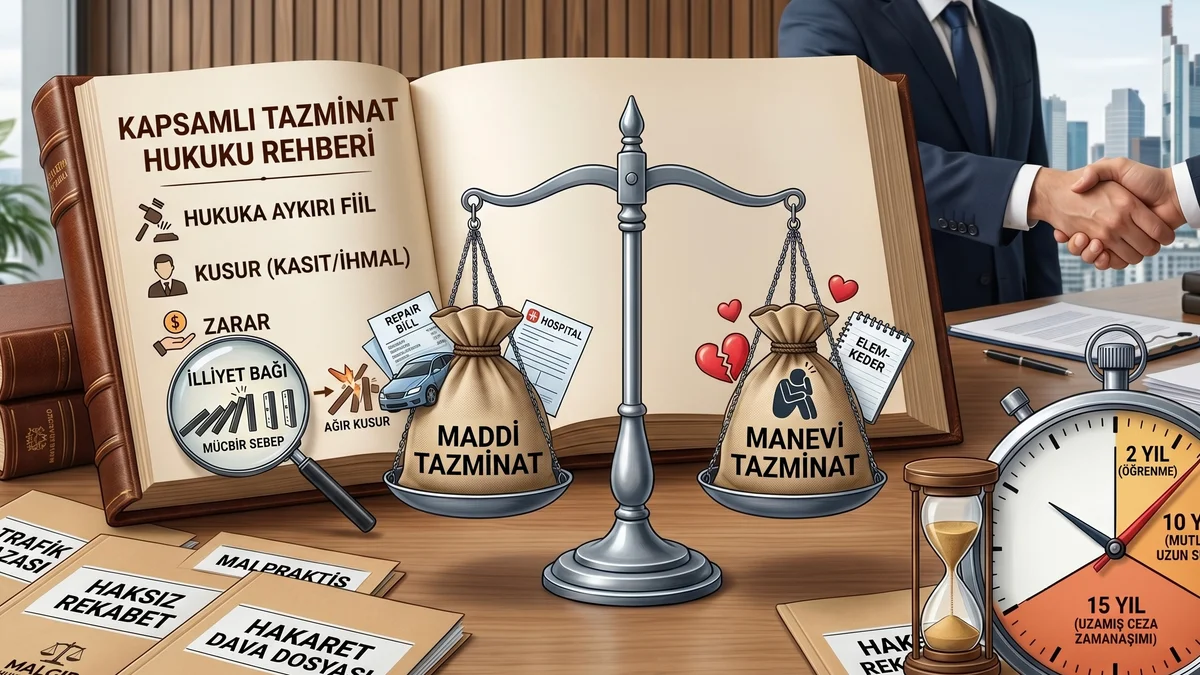
Comprehensive Guide to Compensation Law: Torts, Requirements for Pecuniary and Non-Pecuniary Damages, and the Statute of Limitations
In daily life, suffering damages as a result of a traffic accident, unfair competition, medical malpractice, or an insult directed at your person is a constant possibility. Our legal system mandates that no one is obliged to endure damages inflicted by the fault of another.
As Malgır Law Firm, we analyze in deep detail the concept of tort under the Turkish Obligations Code (TBK) No. 6098, the details of lawsuits for pecuniary and non-pecuniary damages, trial procedures, and the statute of limitations pitfalls that decisively dictate the fate of a lawsuit.
1. What is a Tort? Distinement from the Concept of “Crime” in Criminal Law
Article 49 of the Turkish Obligations Code No. 6098 defines a tort (haksız fiil) as follows: “A person who inflicts damage on another through a faulty and unlawful act is obliged to remedy this damage.” There is a frequent misconception among citizens that “a tort equals a crime.” However, the concept of a tort in the Law of Obligations and a crime in Criminal Law are fundamentally distinct:
Requirement of Statutory Specificity (Tipiklik) in Crime: In criminal law, for an act to constitute a crime, it must be explicitly defined as such in the text of the penal code. In tort law, however, a general “unlawfulness” suffices. An act may constitute a tort even if it does not amount to a criminal offense.
An Acquittal Does Not Bind the Civil Judge (Art. 74 TBK): Even if the perpetrator is acquitted in a criminal court due to “insufficient evidence,” the civil judge is not bound by this acquittal. The civil court executes its own independent evaluation of evidence and can sentence the perpetrator to pay both pecuniary and non-pecuniary damages.
2. Constitutive Elements of a Tort
For compensation to be legally claimed in any given incident, the following four elements must occur simultaneously:
A. Unlawful Act (Hukuka Aykırı Fiil): The violation of a right protected by the legal order (such as life, bodily integrity, property, honor, and reputation).
B. Fault (Kusur - Intent or Negligence): The perpetrator committing the act knowingly and willfully (intent / kasıt) or by failing to demonstrate the necessary care, attention, and precaution (negligence / ihmal / taksir).
C. Damage (Zarar): The involuntary diminution occurring in the victim's assets or personal sphere as a result of the act.
D. Causal Link / Proximate Cause (İlliyet Bağı): A logical and direct cause-and-effect relationship between the resulting damage and the committed act. The answer to the question “Would this damage have occurred but for this act?” must be a definitive “No.”
Critical Legal Domain: Factors Severing the Causal Link
If the causal link is severed (illiyet bağının kesilmesi), the perpetrator cannot be held liable for the damages. The three primary elements that sever the causal link are:
Force Majeure (Mücbir Sebep): Where the primary cause of the damage is an unforeseeable natural event (such as an earthquake or flood) rather than the act of the perpetrator.
Gross Fault of the Victim: Where the damage arises from the victim’s own mind-bogglingly gross fault (e.g., deliberately jumping in front of a moving vehicle).
Gross Fault of a Third Party: Where the intervention of another individual's gross fault completely neutralizes the effects of the original perpetrator's act.
3. Pecuniary Damages: Scope and Categories
Pecuniary damages (Maddi Tazminat) aim to remedy the measurable financial diminution occurring in the victim's assets as a result of a tort. Pursuant to the TBK, pecuniary damage consists of two primary components:
Actual Loss (Fiilî Zarar): The direct diminution occurring in assets (such as the repair expenses of a damaged vehicle or hospital bills).
Loss of Profits / Loss of Earnings (Yoksun Kalınan Kâr): The deprivation of potential earnings that the victim would have acquired but for the tortious act (e.g., a taxi driver’s loss of income due to an inability to operate their vehicle for a month following an accident).
Special Circumstances (Bodily Injuries and Death)
Pursuant to Article 54 of the TBK, in cases of bodily injury, treatment expenses, loss of earnings, and losses arising from the reduction or economic loss of working capacity (disability compensation / işgöremezlik tazminatı) can be legally claimed. Pursuant to Article 53 of the TBK, in the event of death, funeral expenses, treatment expenses if death did not occur immediately, and crucially, Compensation for Deprivation of Support (Destekten Yoksun Kalma Tazminatı) for the dependents who relied on the deceased, are demanded.
4. Non-Pecuniary Damages: Remedies for Moral Suffering
Regulated under Articles 56 and 58 of the TBK, non-pecuniary damages (Manevi Tazminat) constitute a monetary sum awarded to alleviate, even if to a slight degree, the bodily pain, sorrow, grief, fear, and psychological distress endured by the victim or their immediate family due to a tortious act.
Prohibition of Unjust Enrichment: Pursuant to settled Court of Cassation jurisprudence, non-pecuniary damages cannot be so exorbitant as to cause unjust enrichment for the victim, nor can they be so destructive as to force the perpetrator into insolvency. Its purpose is not punitive; rather, it is designed to provide a sense of psychological satisfaction and solace to the victim.
Who Inherently Qualifies to Claim? The individual whose bodily integrity has been impaired can claim directly. Furthermore, in cases of severe injury or death, the immediate relatives of the victim (mother, father, spouse, children) can also claim non-pecuniary damages due to the profound psychological suffering they have personally endured.
5. Criteria for Judicial Determination and Mitigation Factors
A civil court judge does not perform a mechanical multiplication when calculating compensation. Pursuant to Articles 51 and 52 of the TBK, the court meticulously weighs the following criteria:
Gravity of Fault: The higher the degree of the perpetrator's fault, the wider the boundaries of compensation expand.
Socio-Economic Status of the Parties: Especially regarding non-pecuniary damages, the income levels and financial standings of both parties are directly influential.
Reduction for Contributory Negligence (Müterafik Kusur İndirimi): This constitutes one of the most vital defense instruments for a perpetrator. If the injured party also contributed to the occurrence or aggravation of the damage (for instance, a passenger injured in a traffic accident failing to wear a seatbelt, or a motorcyclist failing to wear a helmet), the court executes a 20% to 30% reduction over the calculated compensation amount.
6. Court of Subject-Matter Jurisdiction and Venue (HMK Rules)
Pursuant to the Civil Procedure Code (HMK), initiating a compensation lawsuit before the incorrect court results in a procedural dismissal after months of litigation.
Subject-Matter Jurisdiction: As a rule, the competent court is the Civil Court of First Instance (Asliye Hukuk Mahkemesi). However, if the dispute arises between an employee and an employer, the Labor Court holds jurisdiction; if a traffic accident claim is filed against an insurance company, the Civil Court of Commerce holds jurisdiction.
Venue / Territorial Jurisdiction (Art. 16 HMK): Regarding torts, the law provides great convenience to the plaintiff by granting alternative venues. The lawsuit can be initiated before:
The court of the domicile of the defendant,
The court where the tort was committed,
The court where the damage occurred,
The court of the domicile of the injured party (the plaintiff).
7. The Most Critical Domain: Statute of Limitations vs. Statutory Forfeiture Periods
In procedural law, a Statutory Forfeiture Period (Hak Düşürücü Süre) and a Statute of Limitations (Zamanaşımı) are completely distinct. When a statutory forfeiture period expires, the right dies permanently, and the judge must take this into consideration ex-officio (resen). Conversely, compensation claims arising from torts are subject to a statute of limitations, meaning that if the opposing party fails to explicitly assert a statute of limitations objection (zamanaşımı def'i), the case continues even if the timeframe has lapsed.
Pursuant to Article 72 of the TBK, the Statutes of Limitations for Torts are structured as follows:
The Dual Short-Term Period (2 Years): A lawsuit must be filed within 2 years commencing from the date the injured party learns of the damage and the identity of the person liable for compensation (the perpetrator).
The Absolute Long-Term Period (10 Years): Regardless of when the damage or the identity of the perpetrator is learned, the right to claim compensation completely lapses 10 years after the date the tortious act was originally committed.
Extended Criminal Statute of Limitations (The Exception / Uzamış Ceza Zamanaşımı): If the tortious act simultaneously constitutes a crime under penal statutes, and the criminal statute of limitations for that specific offense is longer (for instance, if the criminal limitation period for involuntary manslaughter is 15 years), this longer criminal limitation period applies to the compensation lawsuit filed before the Civil Court. This rule stands as the absolute strongest safeguard for victims.
Conclusion and Strategic Legal Assessment
Lawsuits for compensation arising from torts rely on highly technical dynamics, such as the precision modeling of fault ratios, the examination of actuarial expert witness reports, contributory negligence defenses, and the execution of extended criminal statutes of limitations. Initiating lawsuits based on casual assumptions or pre-printed, generic template petitions can backfire, burdening you with thousands of Liras in state court fees and statutory counter-attorney fees.
Deploying our extensive experience spanning from traffic accidents to workplace injuries, and from unfair competition to medical malpractice, Malgır Law Firm secures the material and moral compensation of our clients at the maximum statutory limits, backed by contemporary Court of Cassation jurisprudence and the procedural safeguards of the HMK.
This article was prepared by Av. Mehmet Serhat MALGIR.
Related Articles

Action to Annul a Mediation Settlement Document — Conditions and Case Law
Absolute Nullity in General Assembly Resolutions: The Conflict Between the YSK and the Civil Judiciary in Political Parties