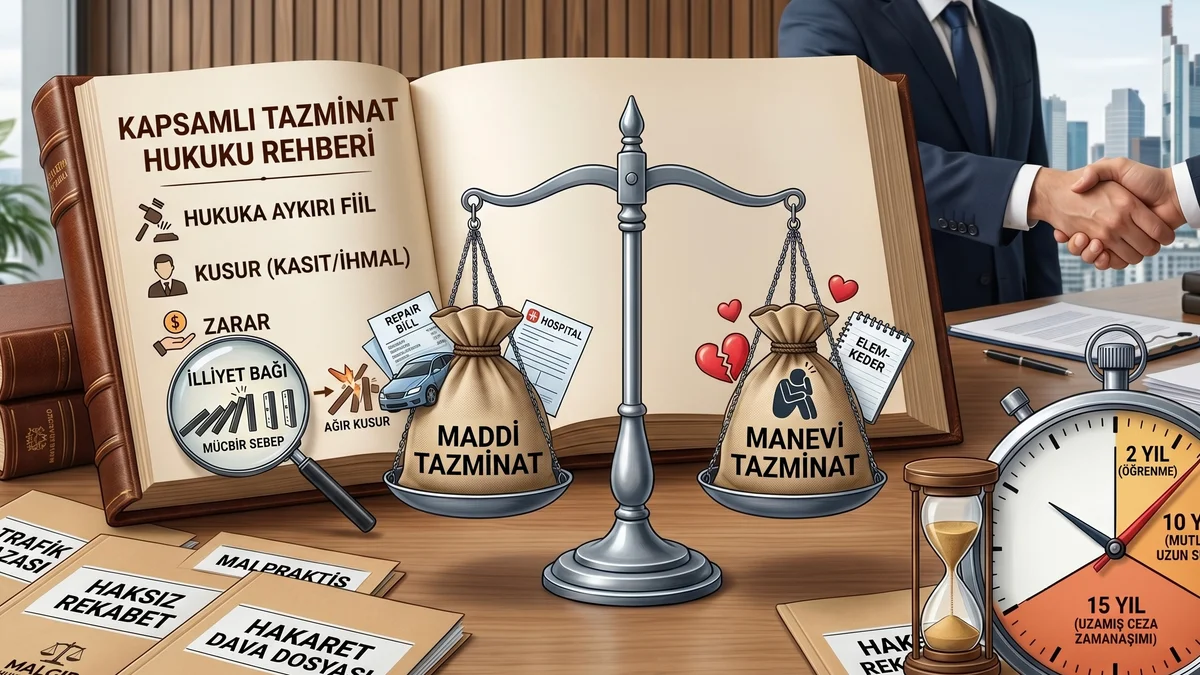
Are WhatsApp Chats Conclusive Evidence in Court? Guide to Electronic Evidence in Light of HMK and Court of Cassation Jurisprudence
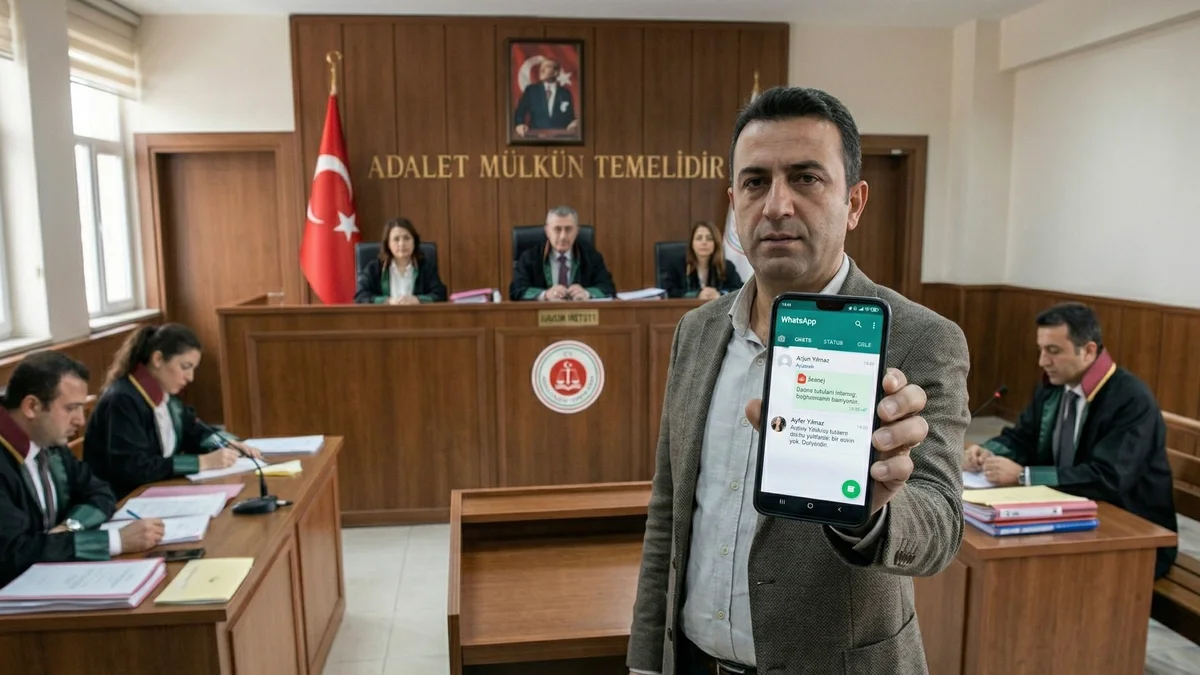
The Legal Status of WhatsApp and Social Media Records: Guide to Electronic Evidence
In an increasingly digitalized world, numerous legal transactions—ranging from commercial agreements to employment relationships, and from lease agreements to acknowledgments of debt—are executed via WhatsApp, e-mail, or social media platforms. However, does every screenshot qualify as incontrovertible and absolute proof in a court of law? As Malgır Law Firm, we have analyzed the legal strength and boundaries of electronic evidence in light of the Civil Procedure Code (HMK) No. 6100 and contemporary judicial practices.
1. The Concept of “Document” Under the HMK and WhatsApp
Pursuant to Article 199 of the HMK; any data, audio or video recordings, and similar information carriers that are fit to prove the facts subject to a legal dispute possess the legal status of a “document” (belge).
WhatsApp chats fall squarely within the scope of this article as “documents.” However, under civil procedural law, evidence is fundamentally divided into two categories: Conclusive Evidence (Kesin Delil) and Discretionary Evidence (Takdiri Delil).
Obligation of Proof by Written Instrument (Senetle İspat Zorunluluğu - Art. 200 HMK): Claims exceeding a specific monetary threshold (the statutory limit adjusted for the year 2026) can, as a rule, only be proven via a written instrument (senet).
Commencement of Written Evidence (Yazılı Delil Başlangıcı - Art. 202 HMK): If you do not possess a formal written contract or instrument, but you hold a WhatsApp message that renders the alleged claim highly probable, this message constitutes a “commencement of written evidence.” Consequently, you legally acquire the right to present oral witness testimony in a lawsuit where witness evidence would otherwise be strictly inadmissible.
2. Contemporary Approach of the Court of Cassation: Is a WhatsApp Message Sufficient on Its Own?
Recent judgments rendered by the General Assembly of Civil Chambers of the Court of Cassation have carried WhatsApp records a step beyond being a mere “commencement of written evidence,” paving the way for them to be evaluated as “conclusive evidence” under specific circumstances.
Nevertheless, for a WhatsApp message to be safely adopted as the foundation of a judicial judgment, two criteria bear vital importance:
Attribution (Who Sent the Message?): It must be established beyond any reasonable doubt that the phone number or digital profile from which the message originated genuinely belongs to the relevant party to the dispute.
Integrity and Non-Manipulation: It is mandatory that the screenshot has not been tampered with, that the logical flow of the conversation remains uninterrupted, and that the text has not been extracted from its original context.
3. A Bare Screenshot vs. The Device Itself
The most frequent technical error committed in practice is taking a bare screenshot of the conversation and subsequently deleting the original record from the phone's storage.
Determination of Evidence (Delil Tespiti): If the opposing party objects to the evidence by asserting, “I did not send this message,” or “This image is a digital fabrication/montage,” the court will order a forensic mirror imaging (imaj alma) of the mobile device or direct the file to a technical expert evaluation.
Notarial Certification: Validating and certifying crucial correspondences through the public notary via e-determination (e-tespit) against the risk of deletion upgrades the evidentiary reliability of the document to the highest tier.
4. Can Unlawfully Obtained Messages Be Admitted as Evidence?
Pursuant to Article 189, paragraph 2 of the HMK; evidence that has been obtained unlawfully cannot be taken into consideration by the court in the determination of a fact.
Privacy of Personal Life: WhatsApp conversations obtained by covertly taking someone else's device, cracking their password, or deploying spyware constitute a flagrant violation of privacy. Presenting such records will strip you of your rightful standing, render the evidence inadmissible, and trigger criminal prosecution against you.
The Exception: Presenting messages that were sent directly to your own device or extracting conversations from a group chat in which you are a registered participant is generally deemed legally compliant and admissible.
5. The Evidentiary Power of WhatsApp in Employment and Lease Disputes
Labor Law: Directives issued by an employer via WhatsApp, logs indicating shift start-and-end times, or a message sent by an employee stating, “I am sick today, I cannot report to work,” constitute the most robust categories of evidence in reinstatement actions and receivables lawsuits.
Lease Law: Mutual understandings reached by parties over WhatsApp regarding rent adjustments or explicit admissions concerning an undertaking to evacuate the premises (tahliye taahhüdü) can be legally construed as binding contractual terms.
Conclusion and Strategic Legal Recommendation
WhatsApp correspondences possess the leverage to shift the entire course of a lawsuit when submitted through accurate procedural channels; conversely, they can be treated as completely non-existent if presented unlawfully or successfully challenged. Especially regarding monetary claims above the statutory instrument threshold, whether these chats will be classified as a mere commencement of written evidence or as conclusive evidence depends entirely on how the pleadings are strategically structured.
Malgır Law Firm provides technical and legal consultancy to our clients regarding the preservation, digital presentation, and expert witness management of electronic evidence. Remember; in the digital world, it is not the deleted messages that cause defeat, but the rights that fail to be judicially proven.
This article was prepared by Av. Mehmet Serhat MALGIR.