Giving a Statement to the Public Prosecutor — What to Bear in Mind
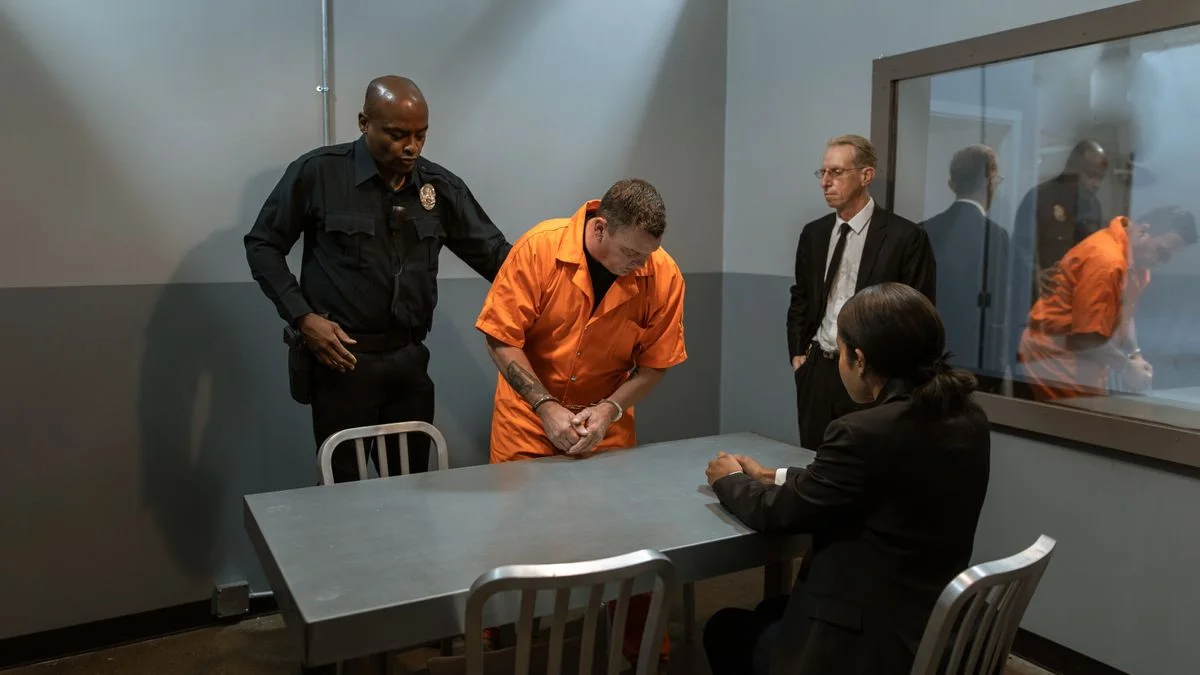
A legal guide under the Code of Criminal Procedure to the suspect's rights when giving a statement to the public prosecutor, the right to silence, the right to counsel and prohibited methods of taking statements.
Giving a Statement to the Public Prosecutor — What to Bear in Mind
One of the most critical stages of a criminal investigation is the taking of the suspect's statement at the public prosecutor's office. The taking of statements is governed in detail in Articles 147 and 148 of the Code of Criminal Procedure No. 5271 (CMK). Mistakes made at this stage can adversely affect the whole of the proceedings. This article deals comprehensively with how a statement is taken, the suspect's rights, the exercise of the right to silence, the right to have counsel present, prohibited methods of taking statements, and the evidential value of a statement.
What Procedural Rules Must Be Observed?
Under CMK Art. 147 the suspect's identity is first established; the offence alleged against them is explained; and they are informed of the right to choose counsel and to benefit from counsel's assistance, of the opportunity to notify their relatives, of the right to silence and of the right to request that evidence in their favour be gathered. Information is obtained about the suspect's personal and economic circumstances and their statement is recorded as given of their free will.
The minutes contain the place and date of the procedure, the identity and capacity of those present, whether the rights were communicated, the content of the statement and the signatures of those taking part; where a person refuses to sign, the reason is recorded. Details such as the start and end times, breaks and physical condition may be added to the minutes according to the circumstances; each of these is not listed as a separate mandatory element in CMK Art. 147.
Audio and video recording may be used only within the framework of a statutory basis, the relevant regulation and the rules on the protection of personal data. There is no general rule that every prosecutor's statement is routinely recorded on camera.
What Is the Right to Silence and How Should It Be Exercised?
The right to silence is the guarantee, under Art. 38 of the Constitution and CMK Art. 147/1-e, that a person cannot be compelled to make self-incriminating statements. A suspect may decline to answer all or some of the questions about the incident; the obligation as to identity details under CMK Art. 147/1-a is nevertheless reserved. A conviction cannot be based on silence alone.
The right to silence and not to incriminate oneself is among the fair trial guarantees under ECHR Art. 6. Silence is not a confession and cannot be made the sole or decisive basis of a conviction. Whether an inference may be drawn from silence in a particular case is assessed having regard to the limited situations in which an explanation could be expected in the face of sufficient evidence, and to the proceedings as a whole.
Counsel's role in the exercise of the right to silence is critical. Assessing the circumstances of the case, counsel advises the suspect on whether to exercise the right to silence and which questions to answer. The final decision is nevertheless the suspect's. Exercising the right to silence is a strategic legal choice and must be assessed differently in each case.
That the suspect has exercised the right to silence must be expressly recorded in the minutes. Statements such as “I do not wish to give a statement” or “I do not wish to give a statement without my counsel” must appear in the record. Failure to record the exercise of the right to silence may become a matter of dispute later.
How Is the Right to Have Counsel Present Exercised and When Is It Mandatory?
A suspect may benefit from counsel's assistance at every stage of the investigation and may meet counsel in an environment where others cannot hear. Counsel may be present when the statement is taken; legal assistance may not be obstructed. On the special statutory conditions, the right to meet may be restricted by judicial order for a maximum of twenty-four hours; no statement may be taken during that period.
Under CMK Art. 150, counsel is appointed without any request being required for a child who has no counsel and for a suspect so disabled as to be unable to defend themselves or who is deaf and mute. Representation is also mandatory for offences carrying a minimum sentence of more than five years' imprisonment. Counsel's assistance is mandatory at questioning on an application for detention under CMK Art. 101/3.
Counsel may examine the minutes and request the correction of a statement recorded wrongly or incompletely and the recording of any unlawfulness. Decisions on defence strategy should be taken together with the suspect, having seen the accessible scope of the file.
Counsel provides legal assistance during the taking of the statement, objects to prohibited methods or procedural irregularities, and examines the minutes and seeks explanations or corrections. Legal assistance is not a power to answer in place of the person giving the statement or to obstruct the procedure. The opportunity for confidential consultation and effective assistance must be preserved, and any restriction applied must be recorded in the minutes.
What Are the Prohibited Methods of Taking Statements?
Under CMK Art. 148 the suspect's statement must rest on their free will. Ill-treatment, torture, the administration of drugs, exhaustion, deception, the use of force or threats, and physical or mental interventions impairing the will are prohibited; no unlawful benefit may be promised. A statement obtained by such methods cannot be assessed as evidence even with consent.
A statement taken by the police without counsel present cannot form the basis of a judgment unless confirmed by the suspect or defendant before a judge or court. If a further statement about the same incident becomes necessary, the procedure may be carried out only by the public prosecutor.
The conduct of a public official using a prohibited method may, according to the circumstances, give rise to liability for torture, ill-treatment, exceeding the power to use force, or another offence, and to disciplinary liability. The legal position of other evidence subsequently obtained is determined by examining its source, its connection with the prohibited method and whether it was obtained independently; Turkish law contains no single-sentence rule automatically excluding all derivative evidence without any examination.
Under CMK Art. 148, free will may not be impaired by physical or mental interventions such as ill-treatment, torture, the administration of drugs, exhaustion, deception, the use of force or threats, or the promise of an unlawful benefit. Lawful information-giving and an unlawful promise are not the same. A statement obtained by a prohibited method cannot be assessed as evidence even if the person consents.
What Is the Evidential Value of a Suspect's Statement?
A statement taken by the police without counsel present cannot form the basis of a judgment under CMK Art. 148/4 unless confirmed by the suspect or defendant before a judge or court. That special rule does not cover a prosecutor's statement in the same way. A statement to the prosecutor must likewise be taken of free will and in accordance with the law and, if it is to be used in the judgment, must be produced and discussed at the hearing.
A confession does not of itself automatically produce a conviction; the internal consistency of the statement and its consistency with the other evidence are assessed. A subsequent change of statement does not of itself nullify the first, but the reason for the inconsistency must be investigated.
Unlawfully obtained evidence is excluded from consideration. That said, Turkish law contains no unlimited formula treating every piece of evidence obtained after an unlawful act as invalid automatically and without exception; the independent source of the subsequent evidence and its causal link with the initial unlawfulness are examined concretely.
A prosecutor's statement is evidence in the nature of a declaration; the statute contains no numerical rule of proof treating it as of itself sufficient or insufficient in every case. A conviction must be founded on the whole of the evidence produced and discussed at the hearing, with a conviction free from doubt. CMK Art. 148/4 is examined in particular for a police statement taken without counsel, and lawfulness, free will and discussion at the hearing for a prosecutor's statement.
Inconsistencies between a statement given to the public prosecutor at the investigation stage and one given before the court at the prosecution stage are frequently encountered in practice. In that case the court investigates the reason for the inconsistency and must explain in its reasoned judgment which statement it relies on and why.
What Is Giving a Statement by Video Link (SEGBİS)?
SEGBİS is the technical system permitting the simultaneous transmission and recording of audio and video. The procedure to be applied is determined by the CMK and the relevant regulation according to whether the procedure is the taking of a statement, questioning or participation in a hearing. The person's effective participation, access to counsel's assistance and the opportunity for confidential consultation must be preserved.
Any interruption of audio or video, problems of identification or communication, or other technical failure affecting the defence must be recorded in the minutes. If the problem impairs the right to a defence, the postponement of the procedure or its conduct in person may be sought. No absolute rule can be laid down requiring SEGBİS in every file or an in-person procedure in every file.
A SEGBİS procedure may be conducted by establishing simultaneous audio and video communication between the technical unit at the courthouse or penal institution where the person is located and the authority conducting the procedure. Access to counsel's assistance and the opportunity for confidential consultation with counsel must be preserved. Where counsel is to be present is determined having regard to the type of procedure and the specific defence needs.
Taking statements by SEGBİS has certain practical advantages: it saves time and cost where statements must be taken in different cities; it removes the risks of transferring detained suspects; and it provides security in witness protection programmes. Critics argue, however, that statements taken by SEGBİS restrict the opportunities for observation afforded by face-to-face communication and that this may adversely affect the right to a defence.
Interruptions of audio or video, delays and other technical problems obstructing communication must be recorded in the minutes. Where a failure impairs effective participation or counsel's assistance, the correction, postponement or in-person conduct of the procedure may be sought. Not every technical failure of itself invalidates the statement; its concrete effect on the right to a defence is assessed.
What Risks Do Inconsistent Statements Create for a Defendant?
Where a suspect's or defendant's statements at different stages are inconsistent, the court assesses together the conditions in which each statement was taken, counsel's assistance, the detail and internal consistency of each, and their consistency with the material evidence. Inconsistency is not of itself proof of guilt; but it may affect the reliability of the statement.
There may be many reasons for inconsistent statements: the suspect making a statement under pressure at the investigation stage, being unable to recall the incident fully, not sufficiently grasping the consequences of the legal process, or making a strategic error. It is therefore of great importance to obtain counsel's assistance when the first statement is given.
Where a defendant's account at the hearing conflicts with an earlier statement made before a judge or court, the earlier statement may be read out on the conditions in CMK Art. 213. The use at the hearing of statements to the prosecutor and the police depends on the type of statement, the position as to counsel and the relevant special provisions. The inconsistency must be explained; merely giving a different account should not automatically produce a result adverse to the defendant.
What Should Be Done If Unlawfulness Is Identified?
Counsel should object immediately to the unlawfulness, request that it be recorded in the minutes and that any wrong or incomplete statement be corrected, and, where necessary, request that the procedure be halted. The suspect should read the document they are to sign; if they refuse to sign, the reason must be recorded. Unlawfulness noticed later may be notified in writing to the investigating authority with a request that the evidence be preserved.
Failure to communicate rights, carrying out a procedure without mandatory counsel, a prohibited method impairing the will, the actual obstruction of counsel's assistance, or minutes that do not reflect the truth may affect the usability of the evidence. CMK Art. 148/3 provides that statements obtained by prohibited methods cannot be assessed as evidence even with consent. That a statement was taken at night is not of itself a separate prohibition within that paragraph.
Where torture or ill-treatment is alleged, evidence such as medical examinations, camera recordings, custody records and transfer documents should be preserved promptly; a criminal complaint to the prosecutor's office and, where the conditions are met, compensation remedies should be considered. An objection to unlawful evidence may be raised throughout the investigation and prosecution; the court may base its judgment only on lawfully obtained evidence.
Official sources: Constitution of the Republic of Türkiye, Code of Criminal Procedure No. 5271, Attorneys Law No. 1136
This article was prepared by Av. Mustafa MALGIR.