Unauthorized Construction and Demolition Order — Remedies and Legal Process
Unlawful Buildings and Demolition Orders — Avenues of Appeal and Legal Process
The problem of unlawful buildings (kaçak yapı) is one of the most significant problems of the urbanisation process in Turkey. Buildings constructed without a permit or in violation of a permit threaten the safety of life and property and disrupt urban order. Law No. 3194 on Zoning (İmar Kanunu) provides for severe sanctions against unlawful buildings. In this article we comprehensively examine the concept of unlawful building, the demolition order process, administrative zoning fines, and avenues of appeal.
What Is an Unlawful Building and How Is It Defined in the Zoning Law?
An unlawful building is a building constructed without a building permit or in violation of the permit and its annexes, pursuant to Article 21 of Law No. 3194 on Zoning (İmar Kanunu). The statute does not directly use the term “unlawful building” (kaçak yapı); instead the expressions “without a permit” (ruhsatsız) or “in violation of the permit” (ruhsata aykırı) are preferred. However, in practice these buildings are commonly referred to as unlawful buildings.
The concept of unlawful building covers a wide spectrum. Buildings constructed entirely without a permit, buildings where a permit was obtained but construction was carried out in violation of the approved project, construction continuing after the permit period has expired, and permit-less additions subsequently made to a permitted building all fall within this scope. Adding an extra floor, enclosing a balcony, and constructing a permit-less annexe building in the garden are also situations that constitute a violation of the permit.
Article 5 of the Zoning Law defines the concept of a “building” broadly: on land and water, whether permanent or temporary, official or private, above-ground and underground construction works and fixed and mobile installations incorporating their additions, alterations, and repairs. Within the scope of this definition, all buildings from a simple outbuilding to a large residential project are subject to the permit requirement.
What Is a Building Stop Record and How Is It Drawn Up?
A building stop record (yapı tatil tutanağı) is an official document drawn up by the municipality or the governorate upon detection of a building without a permit or in violation of a permit, that immediately halts construction. Pursuant to Article 32 of the Zoning Law, once this record is drawn up, the construction is sealed and halted.
The process of drawing up a building stop record works as follows: An on-site inspection is carried out by the municipal enforcement officers (belediye zabıtası) or building inspection teams. If a building without a permit or in violation of a permit is identified, a building stop record is drawn up. The record states in detail the location and nature of the building and the type and scope of the violation. The record is served on the building owner or the contractor. From the date of service, construction is immediately halted.
The legal consequences of a building stop record are severe. With the drawing up of the record, the construction is sealed and ongoing construction activity is halted. Continuing construction despite the seal may constitute the offence of “causing environmental disorder due to unlawful construction” (imar kirliliğine neden olma) under Article 184 of the Turkish Criminal Code (TCK), for which a prison sentence of 1 to 5 years is provided. Criminal liability may also arise under the offence of breaking a seal (mühür bozma — Article 203 of TCK).
Following the drawing up of the building stop record, the building owner is given 30 days. Within this period, the building owner must bring the building into compliance with the law by obtaining a permit or remedying the violation of the permit. If the necessary correction is not made at the end of the period, a demolition order is adopted by the municipal executive board (belediye encümeni).
How Is a Demolition Order Adopted and Who Carries It Out?
A demolition order (yıkım kararı) is an administrative decision adopted by the municipal executive board (belediye encümeni) when a building without a permit or in violation of a permit has not been brought into legal compliance within the 30-day period. Pursuant to Article 32 of the Zoning Law, this decision covers the demolition of the entire building or the parts in violation of the permit.
The process for adopting a demolition order is as follows: A building stop record is drawn up and served on the building owner. A period of 30 days is given. If the violation is not remedied at the end of the period, the file is referred to the municipal executive board (belediye encümeni). The board examines the file and adopts a demolition order. The decision is served on the building owner. After service, the building owner is given a reasonable period to carry out the demolition. If the building owner does not carry out the demolition at the end of the period, the municipality carries out the demolition and the costs are recovered from the building owner.
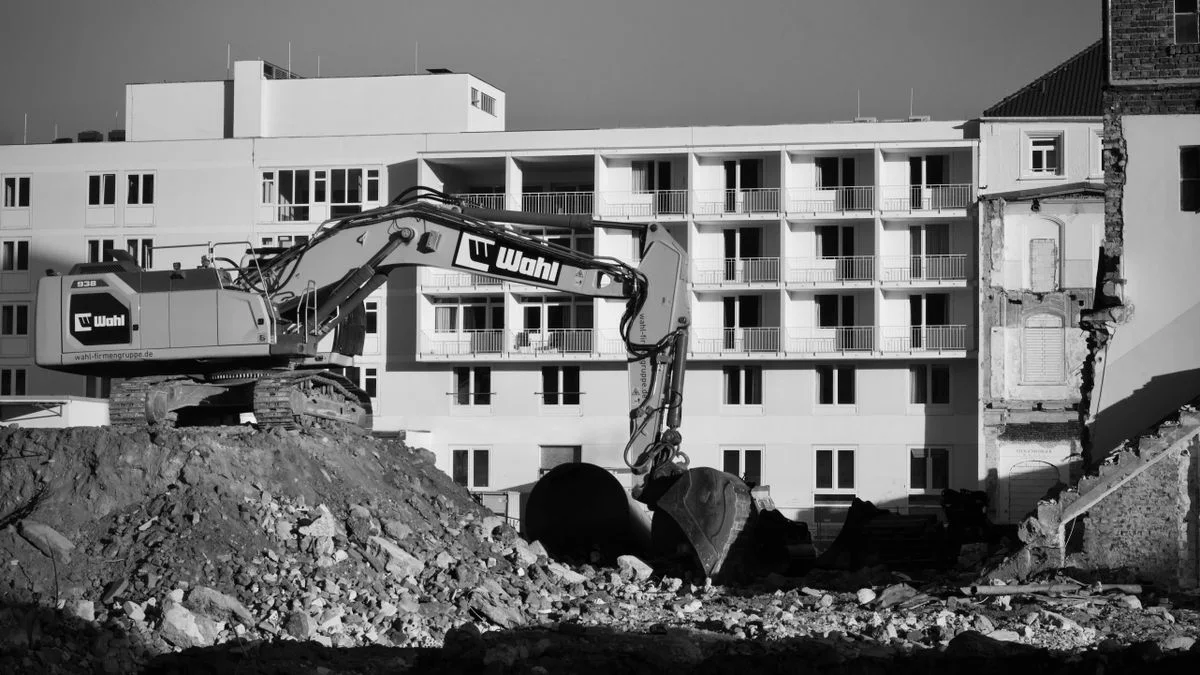
The demolition is carried out by the municipality. Demolition costs are recovered from the building owner. The necessary safety measures are taken during demolition and care is taken not to cause damage to surrounding buildings. In carrying out a demolition order, the municipality may seek assistance from law enforcement if necessary.
How Is an Administrative Zoning Fine Calculated and What Is Its Amount?
An administrative zoning fine (imar para cezası) is an administrative sanction applied pursuant to Article 42 of Law No. 3194 on Zoning (İmar Kanunu) to those who build without a permit or in violation of a permit. The fine is calculated based on the type, area, class, designated use, and nature of the violation of the building. The fine is increased annually at the revaluation rate.
Criteria taken into account in the zoning fine calculation include: the total construction area of the building (square metres), the class of the building (1st class, 2nd class, etc.), the designated use of the building (residential, commercial, industrial, etc.), the nature of the violation (building without a permit or violation of permit), and the area where the building is situated (protected site area, coastal setback line, etc.).
| Type of Violation | Fine Calculation Criterion | Additional Increase Cases |
|---|---|---|
| Building without a permit | Construction area × unit price × building class coefficient | 50% increase in protected site areas |
| Building in violation of permit | Violating area × unit price × building class coefficient | 50% increase at coastal setback line |
| Commencing without a permit | Construction area × unit price | Increase for violation of environmental order plan |
| Continuing despite seal | Additional fine + criminal liability | Prison sentence under TCK Art. 184 |
As of 2026, administrative zoning fine unit prices are applied at [TO BE VERIFIED]. The fine amount may range from a few thousand TL for a small residential building to hundreds of thousands of TL for large commercial buildings. If the fine is not paid, enforcement is pursued under Law No. 6183 on the Collection Procedure for Public Receivables (Amme Alacaklarının Tahsil Usulü Hakkında Kanun).
How Is an Appeal Against a Demolition Order Made?
Against a demolition order, an annulment action may be filed before the administrative court within 60 days of service of the decision. Pursuant to Article 7 of Law No. 2577 on Administrative Procedure (İYUK), this period is a peremptory limitation period and an action may not be filed after it has expired. A suspension of execution request must also be made in the statement of claim.
Grounds of illegality that may be raised in an annulment action against a demolition order include: improper drawing up of the building stop record, failure to grant or insufficient granting of the 30-day period, the executive board decision containing insufficient reasoning, proof that the building is not in violation of the permit, an disproportionate demolition order for a building that could have been permitted, and incorrect identification for a building complying with the zoning plan.
Obtaining a suspension of execution order in the annulment action is of great importance. Since a demolition order, once executed, may cause irreversible damage, courts in such cases seriously assess suspension of execution requests. Pursuant to Article 27 of İYUK, the conditions that the act must be manifestly unlawful and that its execution would give rise to damage that would be difficult to remedy must simultaneously be fulfilled for a suspension of execution order to be granted.
A separate appeal against the administrative zoning fine may also be made. An annulment action may also be filed within 60 days before the administrative court against the fine. Actions may be filed in circumstances where an error was made in calculating the fine, where the fine is disproportionate, or where the fine has been applied despite the violation having been remedied.
What Is the Zoning Amnesty (İmar Barışı) and Can It Apply to Unlawful Buildings?
The zoning amnesty (imar barışı) is a regulation that entered into force in 2018 through Provisional Article 16 added to Law No. 3194 on Zoning (İmar Kanunu) and that enabled the obtaining of a building registry certificate (yapı kayıt belgesi) for buildings without a permit or in violation of a permit. This regulation introduced the possibility of applying for buildings constructed before 31 December 2017.
Buildings that obtained a building registry certificate under the zoning amnesty are protected from demolition orders and administrative fines. However, a building registry certificate does not mean that the building has been brought into conformity with zoning legislation; it merely provides temporary protection. Buildings for which a building registry certificate was obtained are not taken into account in zoning plan implementations to be carried out on the parcels where those buildings are situated.
The application period for the zoning amnesty ended on 31 December 2018 [TO BE VERIFIED]. There is no possibility of benefiting from the zoning amnesty for buildings constructed after this date. Whether a new zoning amnesty regulation will be introduced is a matter that is occasionally discussed. As of 2026, whether a new zoning amnesty regulation will be introduced is uncertain [TO BE VERIFIED].
Even if a building registry certificate has been obtained, the following buildings are excluded from the scope: buildings in the Bosphorus (Boğaziçi) coastal zone and the foreground zone; buildings in the Süleymaniye and Sultanahmet areas within the Istanbul historic peninsula; buildings in the Bosphorus coastal zone and foreground zone defined in Law No. 2960 on the Bosphorus (Boğaziçi Kanunu); and buildings on areas under the domain and control of the State.
How Does the Process of Appealing Against a Municipal Executive Board Decision Work?
An appeal against a municipal executive board decision is made by filing an annulment action before the administrative court within 60 days of service of the decision. Executive board decisions are of the nature of final administrative acts, and there is no internal municipal appeals body. An application to a superior authority under Article 11 of İYUK is also possible, but this application suspends the time limit for filing an action.
The following points should be observed when filing an annulment action against an executive board decision: the date and number of the executive board decision must be stated in the statement of claim, the grounds of illegality must be explained concretely, and a suspension of execution must be requested without fail. The action is filed against the municipality that adopted the executive board decision.
Frequently encountered grounds of illegality in executive board decisions: failure to achieve a quorum for meeting and decision-making, failure to take the building owner's defence, inadequate findings in the building stop record, failure to grant the 30-day period, and the decision being without reasons. If these grounds of illegality are established, the court annuls the executive board decision.
Is There a Limitation Period for the Detection of Unlawful Buildings?
There is no limitation period in detection and imposition of sanctions for buildings in violation of zoning legislation. Municipalities may detect and sanction buildings without a permit or in violation of a permit regardless of their age. This point is also clearly stated in Council of State decisions.
However, certain limitations may apply in practice. In respect of administrative zoning fines, the fine is imposed as from the date of detection of the building. It is not possible to impose a retrospective fine for older buildings. Furthermore, buildings that have obtained a building registry certificate are protected from demolition orders and fines for as long as the certificate remains valid.
As regards the offence of causing environmental disorder due to unlawful construction regulated in Article 184 of TCK, a statutory limitation period of 8 years applies. However, this period begins from the date the building is completed. If the building is not completed and construction activity continues, the limitation period does not run. For this reason, criminal liability continues for unlawful buildings that have been under construction for a long time and where construction is still ongoing.
Final note: This content is for general informational purposes only and does not constitute legal advice.
This article was prepared by Av. Mehmet Serhat MALGIR.