Construction Contract in Return for Land Share — Conditions and Disputes
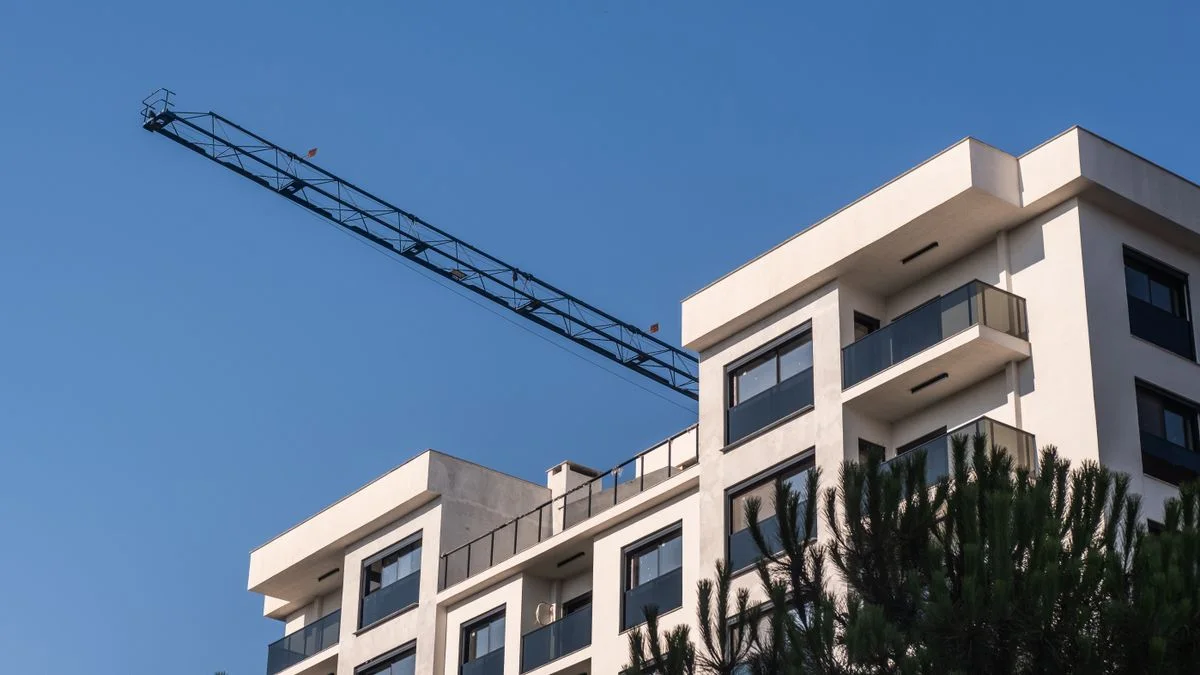
A construction contract in return for land share is a contract between a landowner and a contractor for the construction of a building in return for the transfer of land shares. Learn about the official form requirement, the transfer of title, delay compensation and the conditions for termination.
The construction contract in return for land share is one of the most widespread methods of real estate development in Turkish legal practice. Under it the landowner undertakes to transfer specified shares in their land to the contractor, and the contractor undertakes to construct on the land a building of the qualities agreed in the contract and to deliver specified independent units to the landowner. Subject to the provisions on contracts for works in Article 470 et seq. of the Turkish Code of Obligations, this contract type is of a mixed nature and also incorporates the provisions on the sale of immovables. Also known in practice as the “contract for construction in return for land share”, it produces serious legal consequences for both landowners and contractors and is the source of many disputes.
Legal Nature of the Contract
The construction contract in return for land share is an innominate contract not governed by any specific statute in Turkish law. According to the settled case law of the Court of Cassation, it is a contract of mixed nature combining elements of a contract for works and a promise-of-sale of an immovable. The contractor's obligation to construct the building is subject to the contract-for-works provisions in TBK Art. 470 et seq.; the landowner's obligation to transfer the land share is subject to the provisions on the sale of immovables.
The mixed nature of the contract matters in determining which provisions apply in a dispute. The Court of Cassation determines, according to the nature of the dispute, whether the provisions on contracts for works or on sale apply. In disputes concerning the contractor's obligation to build, the contract-for-works provisions apply; in disputes concerning the transfer of the land share, the provisions on the sale of immovables.
The parties to the contract are the landowner and the contractor. The landowner may be a natural or legal person. Where there are several landowners, all of them must be parties to the contract or must have authorised the landowner who signs it. The contractor is the natural or legal person undertaking the construction work. In practice contractors generally operate as construction companies.
The Official Form Requirement and the Validity of the Contract
Since a construction contract in return for land share involves the transfer of an immovable or a promise of sale, it is subject to official form. It may be drawn up at the land registry directorate or at a notary authorised by statute; mere certification of signatures is not sufficient. Notaries' power since 4 July 2023 to draw up contracts for the sale of immovables is assessed, together with the form of the promise of sale and of the mixed contract, through the current land registry system.
A contract not in the required form is as a rule invalid. In exceptional cases, however — where the parties have largely performed their obligations, title has been transferred and a subsequent plea of invalidity would amount to an abuse of right — TMK Art. 2 may be applied narrowly; a defect of form is not automatically cured.
Transfer of the Land Share and Land Registry Procedures
The transfer of the land share is one of the most critical elements of a construction contract in return for land share. When and how the land shares are to be transferred to the contractor is among the matters that give rise to the most disputes between the parties. Three different methods of transfer are used in practice.
The first method is the transfer of all the land shares to the contractor upon conclusion of the contract. Although advantageous for the contractor, this carries serious risks for the landowner. If the contractor fails to complete the construction or sells the land shares to third parties, the landowner may suffer loss. Where this method is chosen it is therefore recommended that a mortgage or annotation be entered in the land register in the landowner's favour.
The second method is the transfer of the land shares in stages as the construction progresses — for example, thirty per cent on completion of the shell, thirty per cent on completion of the roof storey, and the remaining forty per cent on completion of the finishing works. This is the most widespread practice and balances the parties' interests.
The third method is the transfer of the land shares only after the construction has been fully completed and the occupancy permit obtained. This is the method that best protects the landowner. Contractors are, however, generally reluctant to accept it, since they need the land shares to obtain financing during construction.
If title is not transferred on time, the entitled party may bring an action for compulsory registration under TBK Art. 237 and TMK Art. 716. In such an action the court may order the transfer of title, provided the contractual conditions have been fulfilled. The order for compulsory registration is notified to the land registry directorate and registration is effected.
The Contractor's Obligations and Liabilities
The contractor's principal obligation under the contract is to construct the building with the qualities agreed and to deliver the landowner's independent units on time. Under TBK Art. 471 the contractor must perform the work with loyalty and care, having regard to the employer's interests. The construction must be carried out in conformity with the contract, the technical specification, planning legislation and building standards. If the contractor supplies the materials, they are liable for defective materials as an employer would be under TBK Art. 472. Where a departure from the brand, quality or technical specification in the contract affects the value or use of the work, the provisions on defects come into play; using a different brand is not automatically an “essential defect” in every case. Where the construction is not completed within the agreed period, default, the actual loss from delay and any penalty clause are assessed separately under TBK Art. 117 et seq. and Art. 179 et seq.
Which party bears the obligations as to occupational health and safety, permits, insurance, tax and building inspection is determined by statute and by the contract. Under Law No. 4708 the party to the building inspection service contract is the building owner; the contractor cannot appoint a building inspection body as the building owner's agent. Criminal and civil liability for an occupational accident is likewise determined not by a person's title but by their statutory obligation, fault and connection with the act.
The Landowner's Obligations and Rights
The landowner's fundamental obligation under the contract is to transfer the agreed land shares to the contractor. The landowner must carry out the transfers on time in accordance with the transfer schedule set out in the contract. If the transfer is delayed, the contractor may make claims against the landowner under the provisions on default.
Another obligation of the landowner is to refrain from obstructing the contractor's construction activities. Delivering the land to the contractor in a condition suitable for construction, refraining from unnecessary interference during construction and obtaining the consent of neighbouring landowners where necessary are obligations of the landowner.
The most important of the landowner's rights is the right to supervise the construction to ensure it conforms to the contract. During the construction the landowner may inspect the works personally or through a technical adviser, identify deficiencies and defects and notify them to the contractor. At delivery the landowner has the right to check whether the independent units conform to the contract and to give notice of defects.
Under TBK Art. 474 the employer must inspect the work as soon as the ordinary course of business permits after delivery and give notice of defects within a reasonable period. Latent defects appearing later must be notified without delay (Art. 477). Where the contractor produces defective work through gross fault, the limitation period is twenty years under TBK Art. 478; the consequences of deliberately concealing a defect and of inspection and notice are examined separately under Art. 477.
Delay Compensation and Penalty Clauses
Delay compensation refers to the actual loss arising from late performance; a penalty clause is a contractual sanction independent of proof of loss. A penalty attaching to performance may as a rule not be claimed under TBK Art. 179/2 if performance is accepted without reservation; the creditor must state that they reserve their right to the delay penalty. An excessive penalty may be reduced under TBK Art. 182; for merchants, TTK Art. 22 and the exception of economic ruin are assessed separately.
Termination of the Contract and Its Consequences
If the contractor does not begin the work on time, or if it becomes clear because of delay that they will not be able to complete it at the agreed time, the employer may withdraw under the conditions in TBK Art. 473 without waiting for the delivery date; an additional period is not required in every case. Whether termination has retrospective or prospective effect is determined by the stage of construction, the transfers of title, third parties' acquisitions and the specific contract. It cannot be said that all terminations have only prospective effect.
A third party's acquisition of a share from the contractor is assessed by reference to the fact that the transfer of the land share is conditional on the contractor performing its obligation, and to the third party's good faith; the protection of TMK Art. 1023 is not automatic on every transfer.
Disputes over Defective Work and Incomplete Work
A defect is the delivered work not having the qualities agreed in the contract or reasonably expected; incomplete work is the agreed work not having been carried out at all. For defects, notice and the two-, five- and twenty-year periods in TBK Arts. 474–478 apply; for incomplete work, performance of the obligation and limitation according to the nature of the claim, including TBK Art. 147/6. It should not be said that “incomplete work is always subject to the general five-year period”.
Planning and Permit Problems
Planning legislation is one of the most important sets of rules directly affecting construction contracts in return for land share. Construction carried out without a building permit is unauthorised under Zoning Law No. 3194 and may be ordered to be demolished. It is therefore of considerable importance that the contract clearly specify by whom and when the building permit is to be obtained. Where the number of storeys or the construction area agreed in the contract is reduced by a change in the development plan, adaptation of the contract comes into play. Under TBK Art. 138, where the circumstances existing at the time the contract was made change for an unforeseeable reason not attributable to the parties, the parties may seek adaptation of the contract to the new circumstances. A change in the development plan may be regarded as such a situation.
Who is to obtain the occupancy permit is determined by the permit and by the allocation of obligations in the contract. Where the contractor has assumed that obligation, failure to obtain the permit may amount to incomplete performance, default or a claim for damages. It cannot be generalised, however, that in every contract the occupancy permit is necessarily and solely the contractor's obligation, or that delivery without it is to be treated in all respects as no performance at all.
Dispute Resolution and Competent Court
Subject-matter jurisdiction is determined by the parties' status and the purpose of the transaction: a dispute relating to the commercial enterprises of both parties may be heard by the commercial court of first instance; a consumer transaction by the consumer court; and other private law disputes by the civil court of first instance. In actions concerning rights in rem over an immovable, the exclusive venue rule in HMK Art. 12 applies. In actions for a commercial claim, damages, a negative declaration, restitution or annulment of an objection, TTK Art. 5/A applies; in consumer actions, the mediation condition of action under TKHK Art. 73/A and its exceptions must be checked.
Points to Bear in Mind in Drawing Up the Contract
The independent units or land shares to be built and the parties' reciprocal obligations must be determined or determinable. The project, technical specification, timetable, delivery standard, permit costs, penalty clause, security and allocation table are important in preventing disputes; none of them is of itself a statutory condition of validity. The essential points and the official form must be distinguished from the details that secure performance.
Frequently Asked Questions
In what form must the contract be made?
In official form, since it involves the transfer of an immovable or a promise of sale.
Is every technical detail a condition of validity?
No; the essential points and the official form go to validity, while the other details secure performance and proof.
Does termination always have prospective effect?
No; the result varies according to the stage of construction and the specific circumstances.
Is a third party who acquires a share from the contractor always protected?
No; performance of the obligation and good faith are assessed.
This article was prepared by Av. Mehmet Serhat MALGIR.