Negotiable Instruments Law — Liability on Promissory Notes, Cheques and Bills
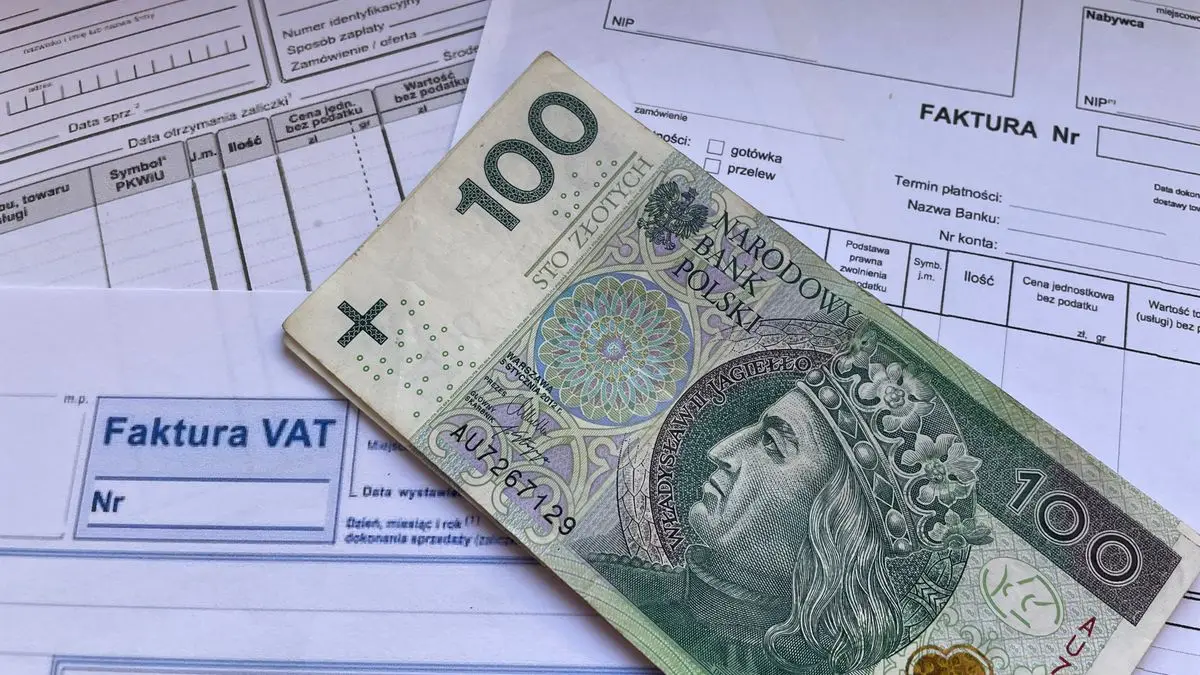
A comprehensive guide to the elements of the promissory note, the cheque and the bill of exchange, the provisions of TTK Arts. 670-823, protest, limitation, the endorser's liability and enforcement specific to negotiable instruments.
Negotiable instruments are among the most fundamental payment and credit instruments in commercial life. The Turkish Commercial Code No. 6102 (TTK) governs negotiable instruments — the bill of exchange, the promissory note and the cheque — in detail in Arts. 670-823. These instruments have the character of commercial paper, and the principles apply that the right recorded in the instrument cannot be asserted independently of it (adherence to the text) and that the right is transferred with the instrument. This article examines comprehensively the types of negotiable instrument, their mandatory elements, the structure of liability, the mechanism of protest and the rules on limitation.
What Are Negotiable Instruments and What Are Their Basic Features?
The bill of exchange, the promissory note and the cheque are commercial paper specifically governed by the Turkish Commercial Code. The exercise of the right in the instrument as a rule depends on its production; in case of loss, the provisions on annulment of commercial paper may apply. The absence of the mandatory elements prescribed by statute may, subject to the supplementary presumptions in the TTK, deprive the document of the character of a negotiable instrument. The obligation on a negotiable instrument is not the same for every signatory. The issuer of a promissory note and the acceptor of a bill are principal debtors; endorsers, the drawer of a bill and those giving an aval in their favour are, on their conditions, recourse debtors. In a cheque the drawee bank does not become an obligor on the instrument by reason of the cheque relationship. A generalisation that “everyone whose signature appears on the instrument is jointly and severally liable in the same capacity” is therefore incorrect.
What Is a Promissory Note and What Are Its Mandatory Elements?
A promissory note is a negotiable instrument containing the issuer's unconditional promise to pay a specified sum to the payee or to their order. Under TTK Art. 776 the text must contain the word “promissory note” or “note payable to order”, the promise to pay a specified sum, the payee, the date and place of issue and the issuer's signature. The maturity and place of payment are also listed in the statute; TTK Art. 777 nevertheless provides supplementary presumptions for some of these elements.
A promissory note in which no maturity is stated is payable at sight. If no separate place of payment is stated, the place of issue is deemed to be the place of payment and the issuer's place of residence; if no place of issue is stated either, the place written next to the issuer's name governs. It is not mandatory for the sum to be shown both in words and in figures. If both are given and differ, the sum in words prevails; if different sums are written more than once, the smallest is valid (TTK Art. 676). The absence of elements for which there is no supplementary presumption, such as the date of issue and the payee, may deprive the instrument of its character.
What Is a Cheque and What Are Its Mandatory Elements?
A cheque, governed by TTK Art. 780 et seq., is a negotiable instrument whose drawee can only be a bank and which is payable at sight. Its mandatory elements are the word “cheque” in the text, an unconditional order to pay a specified sum, the drawee's trade name, the place of payment, the date and place of issue and the drawer's signature. The supplementary and special provisions in the TTK and Cheque Law No. 5941 are also taken into account.
Under TTK Art. 796, a cheque payable in the country in which it was drawn must be presented within ten days if payable in the same place and within one month if payable elsewhere. For a cheque payable in a country other than that in which it was drawn, the period is one month if the places of issue and payment are on the same continent and three months if on different continents; countries with a Mediterranean coastline are treated as being on the same continent. The offence of causing a cheque to be dishonoured under Art. 5 of the Cheque Law is subject to complaint and carries a judicial fine of up to one thousand five hundred days for each cheque leaf; in a particular case the provisions on prohibition, payment and effective remorse are examined separately.
By statute a cheque is payable at sight; a post-dated cheque does not lose its character as a cheque merely for that reason. That said, under transitional Art. 3/5 of the Cheque Law, presentation of a cheque to the drawee bank for payment before the date of issue written on it is invalid until 31 December 2028. Since that transitional rule determines when post-dated cheques may in fact be presented, it must be assessed together with the “payable at sight” principle in the TTK.
What Is a Bill of Exchange and What Are Its Mandatory Elements?
A bill of exchange is a negotiable instrument containing the drawer's unconditional order to the drawee to pay a specified sum to the payee or to their order. Under TTK Art. 671 the word “bill of exchange”, the order to pay a specified sum, the drawee, the payee, the date and place of issue and the drawer's signature are required. The supplementary presumptions in TTK Art. 672 as to maturity and place of payment are reserved.
The drawee becomes the principal debtor upon accepting the bill. Acceptance is as a rule effected by a declaration of acceptance written on the bill and the drawee's signature; a drawee's signature on the face of the bill may also count as acceptance. Where the bill is not accepted or not paid, the holder's recourse against the recourse debtors is subject to the conditions as to presentation, protest and notice.
How Do Endorsement and Transfer of the Instrument Take Place?
A negotiable instrument payable to order is as a rule transferred by endorsement and delivery of possession. The endorsement is written on the back of the instrument or on an allonge and signed by the endorser; it must be unconditional. A partial endorsement is void. In a full endorsement the transferee is named; a blank endorsement may consist of the endorser's signature alone. An endorsement for collection gives the holder authority to collect, and an endorsement by way of pledge gives limited authority for security purposes.
The holder proves their right by an unbroken chain of endorsements; cancelled endorsements are treated as unwritten for that purpose. An endorsement after maturity as a rule has the effects of an endorsement before maturity; an endorsement after a protest or after the period for protest has expired has the effect of an assignment of the claim. The type of instrument, any registered or “not to order” clause and the conditions of delivery may alter the effect of the transfer.
The Legal Position of Endorsers and Other Obligors
The issuer of a promissory note and the acceptor of a bill are principal debtors. An endorser is as a rule liable for non-acceptance and non-payment, but may add a clause excluding liability to the endorsement. Recourse against recourse debtors requires timely presentation and, where necessary, a protest or a declaration in lieu of protest. In a cheque the bank is the drawee but is not the obligor on the undertaking arising from the cheque; the statutory obligation to pay arising under the Cheque Law is a separate matter.
An aval secures the obligation of the person in whose favour it is given. The giver of an aval is liable on the same terms as the person in whose favour it was given; the aval remains valid as a rule even if the obligation it secures is invalid for any reason other than a defect of form.
What Is a Protest and When Is It Required?
A protest is the establishment by a competent authority of non-acceptance or non-payment. For bills and promissory notes it is as a rule required in order to preserve the right of recourse against recourse debtors. A protest for non-payment is drawn up within two business days following the day of payment for instruments payable on a fixed day or a fixed period after issue or presentation. A clause “without expense” or “no protest” may remove the requirement of protest; the obligations of presentation and notice are not, however, thereby extinguished.
For a cheque, non-payment may be established, besides by protest, by a dated declaration written on the cheque by the drawee or by a clearing house declaration. Which method of establishment and which period apply is determined by the type of instrument and the facts.
Limitation Periods
Claims against the acceptor of a bill are time-barred three years from maturity; the holder's claims against endorsers and the drawer, one year from the date of a timely protest or, where there is a clause dispensing with protest, from maturity. Claims of endorsers against one another and against the drawer are time-barred six months from the date of payment or of the action. These provisions also apply to promissory notes by the reference in TTK Art. 778; the issuer of a promissory note is liable as an acceptor.
For cheques, the holder's rights of recourse against endorsers, the drawer and other obligors are time-barred three years from the end of the presentation period; the rights of recourse of one cheque obligor against the others, three years from the date on which they paid the amount of the cheque or the date on which the cheque was asserted against them in an action (TTK Art. 814). The former information about a six-month limitation period for cheques is out of date.
The loss of the right on the instrument does not of itself extinguish the claim arising from the underlying relationship. The unjust enrichment claim in TTK Art. 732 is subject to its own conditions and to a one-year period from the lapse of the right on the instrument.
Enforcement Specific to Negotiable Instruments
Under İİK Art. 167 et seq. the creditor produces to the enforcement office the original instrument and as many certified copies as there are debtors. The period for objecting to the debt or the signature is five days from service of the payment order, and the period for payment is ten days. The objection is made to the enforcement court; as a rule it halts the sale but does not of itself halt the other enforcement steps. The court may, on the statutory conditions, order a temporary stay of the proceedings. On the rejection or acceptance of the objection, the consequences as to compensation and fines are determined under İİK Arts. 169-a and 170 according to the type of objection and the creditor's or debtor's bad faith or gross fault; it cannot be said that “compensation for denial” arises automatically on every dismissal.
Under İİK Art. 72, in a negative declaratory action brought before enforcement proceedings the court may grant an interim measure that no proceedings be commenced, against security of at least fifteen per cent of the claim. In an action brought after proceedings have begun, the proceedings cannot be halted; where the conditions are met, an order that money in the enforcement office not be paid to the creditor may be made. Without observing that distinction, it should not be said that proceedings will be halted in every case against a fixed fifteen per cent security.
Personal Defences and the Protection of Third Parties
A debtor may raise against any holder absolute defences apparent from the text of the instrument or relating to its invalidity. Personal defences arising from a direct relationship with the drawer or previous holders may as a rule not be raised against a subsequent holder; but a holder who, in acquiring the instrument, knowingly acted to the debtor's detriment does not enjoy that protection. The statement that “personal defences may be raised only against the first holder” is too narrow; the person with whom there is a direct relationship and the conditions of acquisition govern.
Aval and Suretyship
An aval is a security on a bill or promissory note given for all or part of the sum. It is written on the instrument or an allonge and bears wording such as “as aval” and the signature of the giver. A signature alone on the face of the instrument, other than that of the drawee or the drawer, is treated as an aval. If it is not stated in whose favour it was given, it is deemed given in favour of the drawer of a bill and the issuer of a promissory note. The giver of an aval is liable on the same terms as the person in whose favour it was given. An aval remains valid as a rule even if the obligation secured is invalid for any reason other than a defect of form. That independence is not an unlimited “complete independence from the principal obligation” covering all cases such as incapacity; the formal validity of the instrument and the validity of the aval signature are also required. The provisions of the Turkish Code of Obligations on the form of suretyship and the spouse's consent do not apply of themselves to an aval.
Frequently Asked Questions
What are the presentation periods for a cheque?
For a cheque payable in the country in which it was drawn, ten days in the same place and one month elsewhere; for a cheque payable in another country, one month on the same continent and three months on different continents. Countries with a Mediterranean coastline are treated as being on the same continent.
May a post-dated cheque be presented to the bank before the date written on it?
Under transitional Art. 3/5 of the Cheque Law, presentation for payment before the date of issue written on it is invalid until 31 December 2028.
What is the limitation period for a cheque?
The holder's rights of recourse, three years from the end of the presentation period; the rights of recourse of cheque obligors against one another, three years from payment or from the claim being asserted in an action.
Does an objection to the debt halt the proceedings?
The five-day objection as a rule halts the sale; the other enforcement steps do not halt of themselves. The court's power to order a temporary stay is reserved.
Is a protest mandatory for every instrument?
It varies according to the type of instrument, the obligor's capacity, any clause dispensing with protest and any declaration in lieu of protest. For a cheque, a bank declaration or a clearing house declaration may also be used.
This article was prepared by Av. Mehmet Serhat MALGIR.