Types of Employment Contract — Fixed-Term, Indefinite-Term and Part-Time
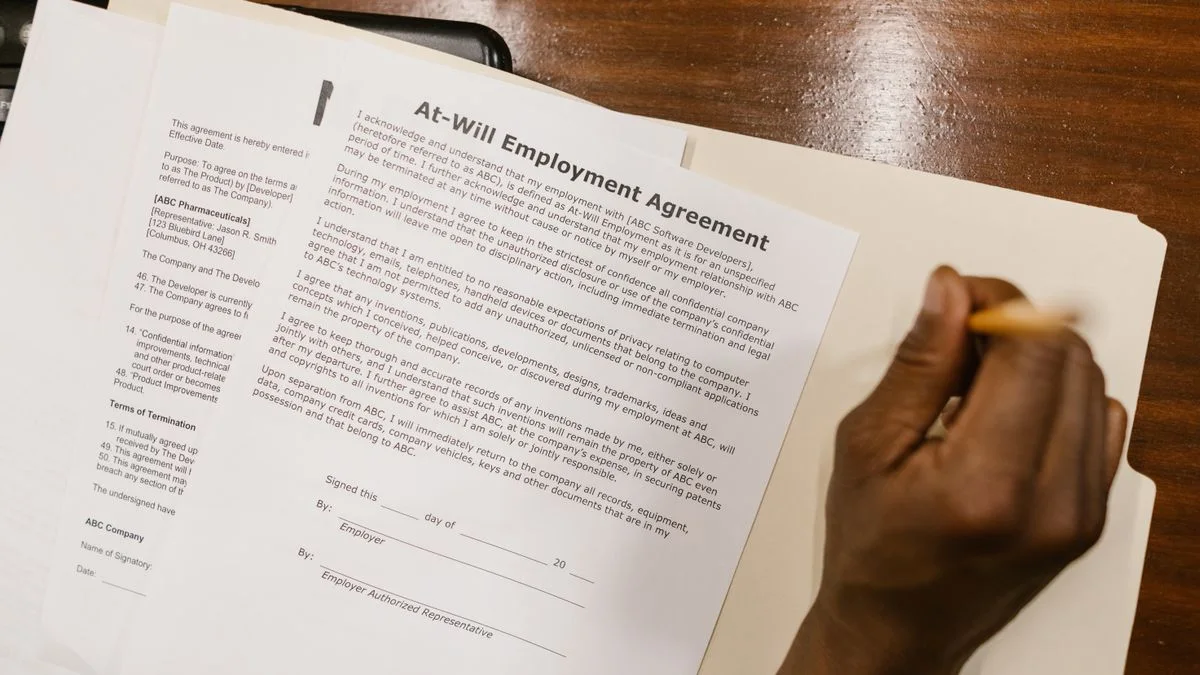
What are the types of employment contract, what is the objective-reason requirement for a fixed-term contract, and what rights do part-time employees have? A guide to employment contracts under Labour Law Arts. 8-14 and the provisions of the Turkish Code of Obligations.
What Is an Employment Contract and What Is Its Legal Basis?
An employment contract is a contract by which one party (the employee) undertakes to perform work in a relationship of subordination and the other (the employer) undertakes to pay a wage. Article 8 of Labour Law No. 4857 sets out the definition of the employment contract and its formal requirements, while Articles 393-469 of the Turkish Code of Obligations No. 6098 contain the general provisions on the service contract.
An employment contract has three fundamental elements: performance of work, remuneration and subordination. The element of performance of work refers to the employee's obligation to carry out a particular task. The element of remuneration comprises the employer's obligation to make payment in return for the work. The element of subordination refers to the employee working in accordance with the employer's instructions and under the employer's supervision. Subordination is the most important feature distinguishing the employment contract from other contracts for the performance of work (contracts for works, agency contracts and the like). An employment contract is as a rule subject to no particular form. Under Labour Law Art. 8/1 an employment contract is subject to no special form unless the statute provides otherwise, and may be concluded orally. The second paragraph of the same article requires employment contracts of one year or more to be made in writing; Labour Law Art. 11 defines a fixed-term employment contract as one subject to an objective condition and made in writing.
The consequence of there being no written text cannot in every case be explained as “the employment relationship is wholly invalid” or “the contract must be fixed-term”. The employee's statutory entitlements for the period actually worked are protected; whether the contract is fixed-term or indefinite-term, its duration, the objective reason and the state of the evidence are assessed together. Where no written contract is made, the employer is obliged, subject to the statutory exception, to provide within two months at the latest a written document setting out the working conditions (Labour Law Art. 8/3).
Indefinite-Term Employment Contract
An indefinite-term employment contract is one concluded without any period being specified. Under Labour Law Art. 11/1, where the employment relationship is not made subject to a term, the contract is deemed indefinite-term. The indefinite-term employment contract is the basic contract type in labour law and enables full benefit to be taken of the protective provisions of the Labour Law.
The most important feature of the indefinite-term employment contract is the obligation to observe notice periods on termination. Under Labour Law Art. 17 the party terminating an indefinite-term contract must give the other party the notice period determined according to length of service. Failure to observe these periods gives rise to an obligation to pay notice pay.
An employee working under an indefinite-term employment contract benefits from all the protective rights afforded by the Labour Law. These rights include severance pay, notice pay, job security (the right to reinstatement), annual leave and trade union rights. The requirement that the employer rely on a valid reason for dismissal, within the scope of job security, is the most important protective mechanism of indefinite-term contracts.
The employer's right to terminate is limited in indefinite-term contracts by the job security provisions in Labour Law Arts. 18-21. At workplaces within the scope of job security (workplaces employing 30 or more employees) and for employees with at least 6 months' service, an employee may bring a reinstatement action where the employer terminates the employment contract without a valid reason.
Fixed-Term Employment Contract
A fixed-term contract is made in writing subject to objective conditions such as work of a fixed duration, the completion of a particular task or the occurrence of a particular event. It may not be concluded successively more than once in a chain unless there is an essential reason; if it is, the contract is deemed indefinite-term from the outset. Seasonal work is not of itself an objective reason in every case; the nature of the work and whether the need is genuinely confined to a season are examined.
The expiry of the term by operation of law does not as a rule give rise to notice pay. Severance pay, however, cannot be refused merely on the label that “the term has expired”; the reason for termination, the intention not to renew and the conditions in Art. 14 of Law No. 1475 are assessed on the facts. Wrongful early termination by the employer falls under TBK Art. 438, and the employee's wrongful failure to start work or abandonment of the work under Art. 439.
Part-Time Employment Contract
A contract is part-time where the employee's normal weekly working time is set significantly lower than that of a comparable full-time employee and, under the Regulation, at no more than two-thirds of it. Where the comparable full-time week is 45 hours, 30 hours or less is part-time; it is not only below 30 hours. A part-time employee benefits from divisible financial entitlements in proportion to the time worked and may not be treated differently merely because they work part-time.
The number of days of social security premiums is not merely the number of days actually attended; the total hours worked in the month are divided by 7.5, with fractions rounded up to a full day, and declared in accordance with social security legislation. The consequences for missing days and general health insurance may vary according to the employee's other circumstances.
On-Call Work
On-call work is, under Labour Law Art. 14, an employment relationship in which it is agreed in the employment contract that the employee will perform the work undertaken when their services are required. This contract type is a special form of part-time work. In on-call work the parties may determine how much work is to be performed within a period such as a week, a month or a year; if this is not determined, the weekly working time is deemed to have been agreed at twenty hours. Unless otherwise agreed, the employer must give the call at least four days in advance. If the daily working time is not specified in the contract, the employer must employ the employee for at least four consecutive hours on each call. These supplementary statutory rules should not be applied as absolute periods without regard to any valid different arrangement made by the parties in the contract.
In on-call work the employee, while remaining available to perform the work for the period determined, does not lose the right to remuneration even if not called upon by the employer. Under Labour Law Art. 14/3 the employer is obliged to pay the wage for the agreed period whether or not it employs the employee.
Employment Contract with a Probationary Period
Under Labour Law Art. 15 the parties may include a probation clause in the employment contract. The probationary period is a maximum of 2 months. It may be extended to up to 4 months by collective agreement. The probationary period is a period allowing both the employer to assess the employee and the employee to assess the workplace.
During the probationary period either party may terminate the employment contract without observing a notice period and without compensation. This right is afforded to both employee and employer. Even during the probationary period, however, the employee's wages and other entitlements for the days worked are reserved. The probationary period counts towards length of service. Where the employment contract continues after the probationary period, that period is included in the calculation of length of service. The probationary period also counts as working time for the acquisition of annual leave rights.
Team Contracts and Temporary Employment Relationships
In a team contract the team leader concludes a written contract with the employer on behalf of the employees; an employment contract is formed between the employer and each employee who starts work. The employer pays each employee's wages separately, and the team leader may not make deductions from the employees' wages.
A temporary employment relationship covers temporary work undertaken as a profession through a private employment agency and transfers established within a holding or group of companies or on the other statutory conditions. The purpose, duration, renewal and prohibitions are set out separately in Labour Law Art. 7; the matter cannot be summarised merely as a six-month intra-group transfer.
Formal Requirements and Content of the Employment Contract
An employment contract is as a rule subject to no special form; contracts of one year or more are made in writing. In a fixed-term contract the writing requirement in Art. 11 applies in addition. Where no written contract is made, the employer provides within two months at the latest a document setting out the working conditions, the term, the wage and the termination provisions; if the contract ends before the two months expire, the document is provided at the latest on the date of termination.
Comparison of the Types of Employment Contract
In an indefinite-term contract, notice of termination and, where the conditions are met, job security govern; in a fixed-term contract, the objective reason and the expiry of the term; in a part-time contract, proportionate entitlements. Job security does not apply automatically to all indefinite-term employees: the conditions in Labour Law Art. 18 are required — at least six months' service, thirty or more employees at the workplace, an indefinite-term contract, and the exception for employer's representatives.
| Feature | Indefinite-term contract | Fixed-term contract | Part-time contract |
|---|---|---|---|
| Structure of the term | The date on which the contract ends is not fixed in advance. | Concluded for a fixed term or task subject to an objective condition. | Working time is two-thirds or less of comparable full-time work; it may be fixed-term or indefinite-term. |
| Ordinary termination | The provisions on notice of termination and termination for just cause apply. | As a rule ends automatically at the end of the agreed term; the conditions for termination and renewal are reserved. | The relevant termination provisions apply according to whether the contract is fixed-term or indefinite-term. |
| Notice pay | May arise on termination with notice where the statutory conditions are met. | As a rule no notice pay arises on normal expiry of the term; termination before the term is assessed separately. | May arise if the contract is indefinite-term and the conditions are met. |
| Feature | Indefinite-term contract | Fixed-term contract | Part-time contract |
|---|---|---|---|
| Job security | Applies where the conditions in Labour Law Art. 18 as to service, employee numbers and others are met. | As a rule does not apply. | May apply where the contract is indefinite-term and the Art. 18 conditions are met. |
| Employment entitlements | Arise in full on the statutory conditions. | The contract type alone does not extinguish accrued entitlements; the conditions for each claim are examined separately. | Divisible financial entitlements are proportionate to working time; no distinction may be drawn merely because of part-time work. |
| Writing requirement | As a rule not a condition of validity, save where the statute specifically requires writing. | The statutory writing provisions are observed, particularly for contracts of one year or more. | Labour Law Art. 8 and the writing provisions relating to the term of the contract apply. |
Frequently Asked Questions
Is 30 hours part-time at a workplace with a 45-hour week?
Yes; two-thirds and below is part-time.
Is all seasonal work fixed-term?
No; the objective reason is examined in the specific case.
Is a written contract always a condition of validity?
No. However, the consequences of the writing requirement in Labour Law Art. 8 for contracts of one year or more, and in Art. 11 for fixed-term contracts, are assessed separately in terms of objective reason, contract type and proof.
Is every indefinite-term employee covered by job security?
No; length of service, employee numbers and the other conditions in Art. 18 are required.
This article was prepared by Av. Mehmet Serhat MALGIR.