Material and Moral Damages in Divorce — Conditions, Assessment and Court of Cassation Practice
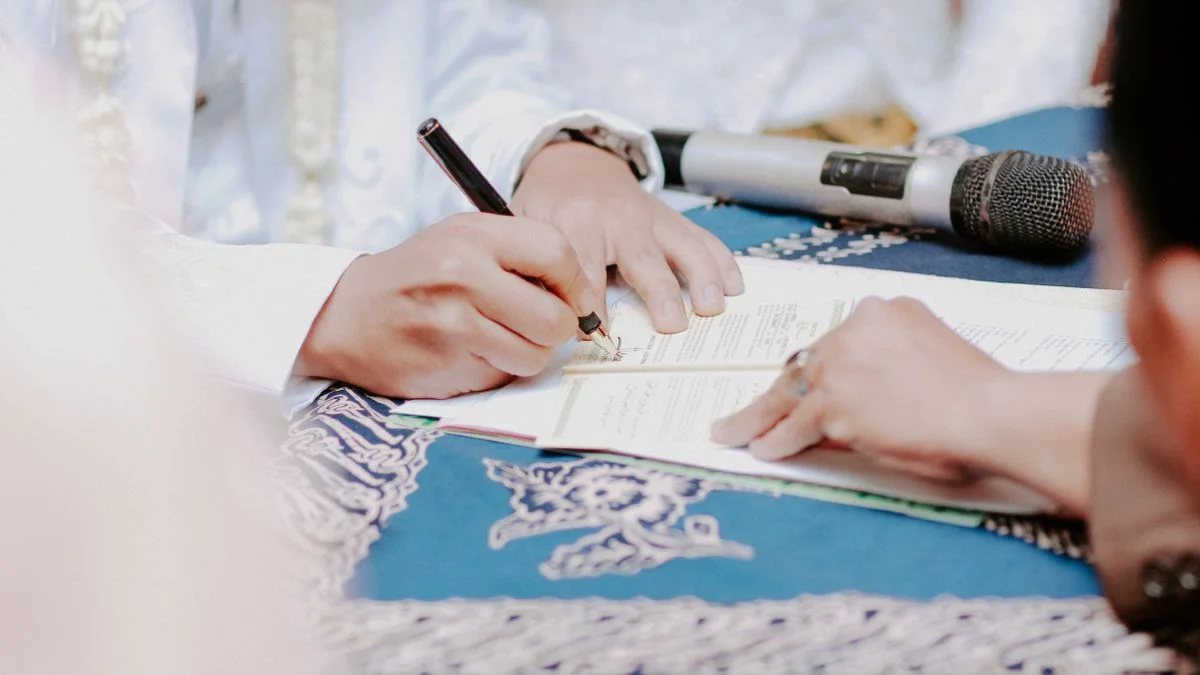
Conditions for material and moral damages in divorce, methods of assessment and the practice of the Court of Cassation, examined in detail under Article 174 of the Turkish Civil Code.
What Are Damages in Divorce?
Material and moral damages in divorce proceedings are governed by Article 174 of the Turkish Civil Code (TMK) No. 4721. A spouse who is free from fault, or less at fault, and whose existing or expected interests have been harmed by the divorce may claim appropriate material damages from the spouse at fault. Under the second paragraph of the same article, a spouse whose personality rights have been infringed by the events giving rise to the divorce may claim payment of an appropriate sum as moral damages from the other spouse at fault.
A claim for damages may be raised together with the divorce action, or brought as a separate action within one year from the date the divorce judgment becomes final (TMK Art. 178). This period is a limitation period, not a forfeiture period.
What Are the Conditions for Material Damages?
Under TMK Art. 174/1, four basic conditions must be met together before material damages can be awarded:
- A divorce judgment must have been granted: A claim for damages is an ancillary claim attached to the divorce action. Damages cannot be awarded unless a divorce judgment is granted.
- The party claiming damages must be free from fault or less at fault: Spouses who are equally at fault cannot claim material damages from one another. The claim of a party who is gravely at fault will be dismissed.
- The other party must be at fault: The party liable for damages must be at fault in the events giving rise to the divorce.
- An existing or expected interest must have been harmed: The divorce must have caused a decline in the claimant's existing standard of living, or the loss of expected interests that would have been obtained had the marriage continued.
The Concept of Existing Interest
Existing interest refers to the standard of living enjoyed within the marriage, the economic security provided and the social status attained. The loss of these interests through divorce forms the basis of a claim for material damages. For example, where a spouse who enjoyed a particular standard of living during the marriage is unable to maintain that standard after the divorce, this is treated as a loss of existing interest.
The Concept of Expected Interest
Expected interest refers to the economic gains that would have been obtained had the marital union continued. A spouse's inheritance expectancy, pension entitlements, career prospects and similar future interests fall within this scope. In the practice of the Court of Cassation the concept of expected interest is interpreted broadly and assessed according to the circumstances of the particular case.
What Are the Conditions for Moral Damages?
Under TMK Art. 174/2, the following conditions must be satisfied before moral damages can be awarded:
- A divorce judgment must have been granted: Moral damages are likewise an ancillary claim attached to the divorce action.
- There must have been an infringement of personality rights: The events giving rise to the divorce must have involved an attack on the claimant's dignity, honour, reputation or emotional integrity.
- The other party must be at fault: The party who infringed the personality rights must have been at fault in those acts.
- The party claiming damages must be free from fault or less at fault: Although it is debated whether moral damages may be awarded where fault is equal, the settled practice of the Court of Cassation is not to award moral damages in favour of an equally faulty spouse.
Conduct Treated as an Infringement of Personality Rights
The principal situations treated by the Court of Cassation as an infringement of personality rights are as follows:
- Adultery
- Physical violence
- Insults and degrading conduct
- Sexual violence or sexual abuse
- Extreme jealousy and controlling behaviour
- Humiliation and belittling in public
- Mistreatment of the spouse's family
- Conduct that destroys mutual trust
How Is the Amount of Damages Determined?
The Turkish Civil Code lays down no fixed tariff or mathematical formula. The judge assesses together the parties' respective degrees of fault, the duration of the marriage, age and health, education and income, standard of living, the purchasing power of money, the gravity of the infringement and considerations of equity. Material damages must be proportionate to the existing or expected interest harmed by the divorce; moral damages must be proportionate to the gravity of the infringement of personality rights. The award may not exceed the amount claimed, nor may it be set at a level producing unjust enrichment.
The regional court of appeal may review the amount within the limits of the parties' appeal and its grounds, procedurally vested rights and the principle of being bound by the claim; it cannot increase the award of its own motion in every appeal.
| Assessment criterion | Effect on the amount of damages |
|---|---|
| The parties' degrees of fault | Both the nature and the gravity of the fault are assessed together, for the purposes of both entitlement and quantum. |
| Interest or personality right harmed | For material damages, the loss of an existing or expected interest; for moral damages, the gravity of the infringement of personality rights. |
| Assessment criterion | Effect on the amount of damages |
|---|---|
| Economic and social circumstances | The parties' incomes, assets, education and standards of living are taken into account in the assessment of equity. |
| Duration of the marriage, age and health | Taken into account in determining the personal and social consequences of the particular case. |
| Purchasing power of money | The economic conditions and the purchasing power of money at the date of judgment are considered. |
| Being bound by the claim, and equity | The court may not exceed the claim; damages may not be set as a means of punishment or unjust enrichment. |
What Is the Difference Between Material Damages and Poverty Alimony?
Material damages and poverty alimony are frequently confused, but they are two distinct institutions differing in legal nature, purpose and conditions:
| Feature | Material damages - TMK Art. 174/1 | Poverty alimony - TMK Art. 175 |
|---|---|---|
| Purpose | To compensate the existing or expected interest harmed by the divorce | To relieve, in proportion to financial means, the poverty arising from the divorce |
| Fault requirement | The claimant must be free from fault or less at fault than the other party; the other party must be at fault. | The claimant's fault must not be graver than that of the alimony debtor; no fault is required on the debtor's part. |
| Form of payment | May be awarded as a lump sum or as periodic payments. | May be awarded as a lump sum or as periodic payments. |
| Feature | Material damages - TMK Art. 174/1 | Poverty alimony - TMK Art. 175 |
|---|---|---|
| Termination and variation | A lump sum payment is a one-off. Where material damages take the form of periodic payments, the automatic termination and removal conditions in TMK Art. 176 apply. | Periodic alimony terminates automatically upon remarriage or death; under the other conditions in TMK Art. 176 it may be removed or varied by the court. |
| Time limit for claiming | May be sought within the divorce action; a separate action is subject to a one-year limitation period running from the date the divorce judgment becomes final. | May be sought within the divorce action; a separate action is subject to a one-year limitation period running from the date the divorce judgment becomes final. |
Limitation and Forfeiture Periods for Damages Claims
After the divorce becomes final, rights of action arising from the termination of the marriage by divorce are subject to a one-year limitation period (TMK Art. 178). This is not a forfeiture period; if the defendant does not plead limitation in time, the judge will not apply it of the court's own motion. Where damages were sought within the divorce action itself, no separate one-year filing question arises.
Damages in Uncontested Divorce
In an uncontested divorce protocol the parties are free to regulate the question of damages as they see fit. They may agree that neither will claim damages from the other, or they may fix a specific amount. An express provision in the protocol stating that “the parties have no claim for material or moral damages against one another” will prevent a damages action from being brought after the divorce.
If the protocol does not address damages at all, a separate damages action may be brought within the one-year limitation period. For this reason it is of considerable importance that the question of damages be regulated in the uncontested divorce protocol clearly and beyond doubt.
Current Practice in Light of Court of Cassation Decisions
In practice, fault, infringement of personality rights, the interest harmed and the parties' economic circumstances are established by concrete evidence. Damages cannot be claimed from a third party with whom a spouse had a relationship on the basis of that relationship alone; where the third party has committed an independent unlawful act infringing personality rights, the general tort provisions may be assessed separately.
Burden of Proof in a Damages Action
In a divorce damages action the burden of proof lies with the party claiming damages. The claimant must prove fault in the events giving rise to the divorce, the infringement of personality rights and the loss of an existing or expected interest. Any lawful evidence may be used to discharge this burden:
- Witness statements
- Messaging records (SMS, WhatsApp, e-mail)
- Social media posts
- Photographs and video recordings
- Bank account movements
- Police reports and forensic medical reports
- Expert reports (social investigation reports and the like)
Payment and Enforcement of Damages
Material damages may be paid as a lump sum or, where the circumstances so require, as periodic payments; moral damages may not be ordered to be paid in periodic form (TMK Art. 176). Instalments in respect of moral damages are possible only by agreement of the parties or under a payment plan established subsequently.
In enforcement based on a judgment, the form of payment set out in the operative part of the judgment governs. Several instalments that have already fallen due may be claimed together in the same enforcement proceedings; a separate proceeding is not necessarily required for each instalment. Future instalments cannot be collected before they fall due.
Frequently Asked Questions
What is the time limit for bringing an action after divorce?
A one-year limitation period running from the date the judgment becomes final; it is not a forfeiture period.
Can moral damages be paid in periodic instalments?
No. An instalment agreement between the parties remains possible.
Can damages be recovered from a third party with whom the spouse had a relationship?
The relationship alone is not sufficient; an unlawful act constituting an independent infringement of personality rights is required.
Does the regional court of appeal increase the amount of its own motion?
It reviews the award within the limits of the appeal, the claim and procedural rules.
This article was prepared by Av. Fatma Rojan MALGIR SAYĞIDAR.